

An Entity Management System (EMS) is a dedicated software platform that centralizes a company’s corporate record — directors, shareholders, licenses, filings, and governing documents — into a single, auditable source of truth. Organizations typically adopt one when spreadsheet-based tracking starts producing missed filing deadlines, conflicting data versions, or governance blind spots across multiple entities and jurisdictions.
Why Spreadsheets Break Down as You Grow
Every company starts somewhere simple: one entity, one spreadsheet, one person who “knows where everything is.” That works — until it doesn’t.
As organizations grow, corporate structure grows with them: new subsidiaries, joint ventures, holding companies, and foreign registrations pile up, often faster than internal processes do. At that point, spreadsheet-based entity tracking becomes a genuine operational risk, not just an inconvenience. The failure modes are predictable and recurring:
- Data silos. Legal keeps its own tracker. Finance keeps another. Tax keeps a third. None of them reconcile automatically, and each team ends up asking “which version is correct?” during audits or board requests.
- Version confusion. A director resignation or a change in registered address gets updated in one file but not another. Weeks later, a filing goes out with stale information.
- Missed deadlines. Annual returns, franchise tax filings, license renewals — each jurisdiction has its own calendar, and spreadsheets have no memory. Nobody gets reminded until the penalty notice arrives.
- No audit trail. When a regulator, acquirer, or auditor asks “who approved this and when,” a spreadsheet can’t reconstruct that history — there’s no changelog, no timestamp, no accountability record.
These aren’t hypothetical risks. Missed statutory filings can trigger late penalties, loss of good standing, or even involuntary dissolution in some jurisdictions — and losing good standing can complicate financing rounds, M&A due diligence, and banking relationships at the worst possible time.
What Is an Entity Management System (EMS)?
An Entity Management System is a software platform purpose-built to manage the corporate record — the complete, authoritative set of data and documents that define how each legal entity in a group is structured, owned, and governed. Rather than living across disconnected spreadsheets and shared drives, this data lives in one system that legal, tax, finance, and compliance teams all draw from.
At its core, an EMS answers questions that should be simple but often aren’t in a spreadsheet-based setup: Who are the current directors of our Singapore subsidiary? When does our license in Brazil expire? Who owns what percentage of our German entity, and has that changed in the last two years?
Key Benefits of Adopting an EMS
Centralized Data
Legal, tax, and finance teams get instant, shared access to organizational charts, entity details, and ownership structures — instead of requesting an update from whoever last touched the spreadsheet. This matters most during time-sensitive events: financing rounds, restructurings, or regulatory inquiries, where “we’ll get back to you” isn’t an acceptable answer.
Automated Alerts
Filing deadlines, license renewals, and director term expirations are tracked automatically, with notifications sent ahead of time — not discovered after a penalty notice arrives. This shifts compliance from reactive (responding to problems) to proactive (preventing them).
Document Repository
Articles of incorporation, bylaws, board minutes, share certificates, and powers of attorney are stored securely in one place, linked directly to the entity they belong to. When due diligence requests come in during an acquisition or financing round, documents are retrievable in minutes instead of days.
Reporting
Complex reports — ownership structures, director appointments, entity charts by jurisdiction — can be generated in seconds rather than reconstructed manually. This is particularly valuable for board reporting, regulatory disclosures, and beneficial ownership reporting requirements, which increasingly demand exactly this kind of structured output.
Spreadsheets vs. an EMS: A Side-by-Side Comparison
| Factor | Spreadsheets | Entity Management System |
|---|---|---|
| Single source of truth | No — multiple versions across teams | Yes — one authoritative record |
| Deadline tracking | Manual, memory-dependent | Automated alerts |
| Audit trail | None or minimal | Full change history |
| Document storage | Scattered across drives/email | Centralized, linked to each entity |
| Reporting speed | Hours to days (manual compilation) | Minutes (generated on demand) |
| Access control | Difficult to manage/restrict | Role-based permissions |
| Scales with entity count | Poorly — risk compounds with each new entity | Designed for multi-entity, multi-jurisdiction structures |
When Should a Company Adopt an EMS?
There’s no fixed headcount or entity-count threshold, but a few signals reliably indicate it’s time:
- You’ve crossed roughly 5–10 legal entities, especially across more than one jurisdiction
- You’ve had at least one missed filing or late-penalty incident in the past 12 months
- More than one team maintains its own version of entity data
- You’re preparing for financing, an acquisition, or an IPO, where due diligence will scrutinize your corporate record directly
- Your beneficial ownership or governance reporting obligations have expanded (a trend accelerating globally as regulators demand more transparency into corporate structures)
Frequently Asked Questions
What’s the difference between an EMS and a document management system? A general document management system stores files. An EMS is purpose-built around legal entities as the organizing structure — every document, deadline, and data point is linked to a specific entity, director, or filing obligation, not just stored in a folder.
Does an EMS replace legal counsel or a corporate services provider? No. An EMS is the system of record; it doesn’t file documents with regulators or provide legal advice on its own. Many organizations pair an EMS with managed compliance services so the platform stays current without internal teams handling data entry themselves.
How does an EMS help during M&A or fundraising due diligence? Due diligence requests typically ask for cap tables, director histories, good-standing certificates, and governing documents across every entity in the group. With an EMS, these are already centralized and exportable, which can meaningfully shorten diligence timelines compared to reconstructing records from spreadsheets and email threads.
Is an EMS only useful for large multinational companies? No — the tipping point is entity complexity, not company size. A mid-sized company with five subsidiaries across three countries faces the same version-control and deadline risks as a much larger company, just at a smaller scale.
How CORPIYA Helps
CORPIYA provides a state-of-the-art Entity Management System tailored for global businesses. Our platform integrates seamlessly with our managed services, meaning our team keeps your data updated for you — so you get the transparency and control of a digital platform without the administrative burden of data entry.
Planning to digitize your corporate records? Reach out to us at contact@corpiya.com to discuss how we can support your next steps.
More Entity Management System Questions, Answered
What is AI-driven corporate governance?
AI-driven corporate governance uses automation and machine learning to monitor filing deadlines, flag compliance gaps, and keep entity data accurate across a group’s structure, reducing the manual tracking that causes missed deadlines and version confusion. It shifts governance from reactive spreadsheet management to proactive, system-driven oversight.
How can AI improve entity management?
AI can automatically flag upcoming filing deadlines, detect inconsistencies between records, and surface entities approaching a compliance risk before it becomes a penalty. Paired with an Entity Management System, this turns a static corporate record into an actively monitored one.
How do companies automate corporate compliance?
Companies automate compliance by centralizing entity data, filing deadlines, and governing documents in a single Entity Management System, then layering automated alerts on top so obligations are tracked without relying on memory or a spreadsheet owner. Many organizations also pair the platform with managed compliance services so the underlying data stays current.
How can technology help manage global subsidiaries?
An Entity Management System gives legal, tax, and finance teams shared, real-time access to each subsidiary’s directors, ownership, licenses, and filing status instead of reconstructing that information from scattered files. This is especially valuable during financing rounds, restructurings, or regulatory inquiries, when answers need to be immediate.
How do I track entity compliance across multiple jurisdictions?
The most reliable way is a dedicated Entity Management System that links every filing deadline, license renewal, and governing document to the specific entity and jurisdiction it belongs to, with automated alerts ahead of each deadline. Once a company crosses roughly five to ten legal entities across more than one jurisdiction, spreadsheet-based tracking reliably starts to break down.
Disclaimer: This article is provided for general informational purposes only and does not constitute legal advice. Sebastien Gaddini is licensed to practice law in New York; this piece addresses business-expansion and compliance topics in a non-legal, informational capacity and should not be relied upon as legal counsel. For advice specific to your situation, consult a qualified attorney licensed in the relevant jurisdiction.

Put These Insights Into Action
Talk to our team about how this applies to your operations — wherever your business takes you, Corpiya is ready to support your next move.
Get In Touch
Related Insights
-
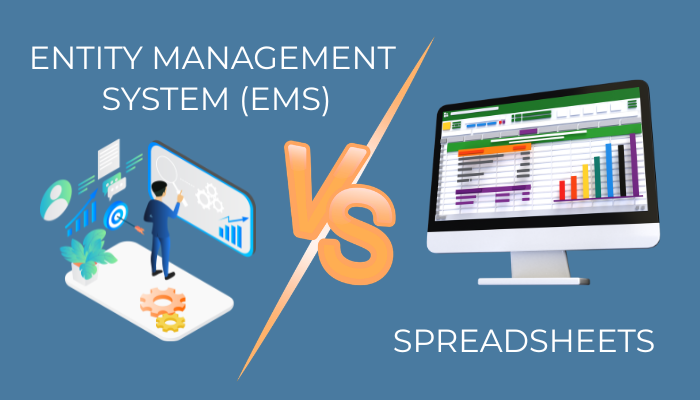
Entity Management System vs. Spreadsheets: Why Companies Make the Switch
Spreadsheets work fine for one or two entities. Past that, they quietly become the biggest risk in your compliance process.…
-

How to Outsource International Back-Office Operations Without Losing Control
Companies that expand into new markets usually replicate their domestic back office locally, country by country — hiring a separate…
-

How Long Does Company Formation Take in Latin America? A Market-by-Market Timeline
Company formation timelines vary widely across Mexico, Brazil, Colombia, Chile, Peru, Ecuador, and Argentina — and the step that actually…