
What Is a Fractional General Counsel (GC)? A Complete Guide for Growing Businesses

What Is a Fractional General Counsel (GC)? A Complete Guide for Growing Businesses

A Fractional General Counsel (GC) is a senior business attorney who provides ongoing legal guidance on a part-time or subscription basis, without the cost of hiring a full-time in-house General Counsel.
Also known as Fractional GC, Virtual General Counsel, or Fractional General Counsil, this model gives growing businesses strategic legal support with predictable pricing.

What Is a Fractional General Counsel (GC)?

A Fractional General Counsel (GC) is a senior business attorney who provides ongoing, strategic legal support to a company on a part-time, subscription-based, or flat-fee basis, rather than being hired as a full-time in-house executive.

Fractional General Counsel services give businesses access to experienced legal leadership, without the high cost, long-term commitment, or overhead of a traditional General Counsel.

This model is also commonly referred to as:

  • Fractional GC

  • Part-Time General Counsel

  • Virtual General Counsel

  • Outsourced General Counsel

  • Fractional General Counsil (a common misspelling searched online)

What Does a Fractional General Counsel Do?

A Fractional GC functions as an embedded legal advisor within your business. Instead of handling isolated tasks, a Fractional General Counsel supports day-to-day legal decisions while aligning legal strategy with business goals.

Common Responsibilities of a Fractional GC

A Fractional General Counsel typically assists with:

  • Contract drafting, review, and negotiation

  • Corporate governance and entity management

  • Employment law guidance and HR compliance

  • Risk assessment and mitigation

  • Vendor, customer, and partnership agreements

  • Regulatory and compliance oversight

  • Intellectual property strategy

  • Fundraising, investor relations, and M&A support

  • Ongoing legal strategy for leadership teams

A Fractional GC is proactive, not reactive—helping businesses avoid legal issues before they arise.

Fractional General Counsel vs Traditional Law Firms

Fractional General Counsel services are designed for modern businesses that value speed, clarity, and cost control.

Who Needs a Fractional General Counsel?

Fractional GC services are ideal for:

  • Startups and founders

  • Small and mid-sized businesses

  • SaaS and technology companies

  • E-commerce and online businesses

  • Professional services firms

  • Companies preparing to scale, raise capital, or exit

If your business needs ongoing legal guidance but does not require a full-time General Counsel, a Fractional GC is the optimal solution.

When Should a Business Hire a Fractional GC?

Many companies benefit from a Fractional General Counsel when:

  • Contracts are signed frequently

  • Legal questions arise weekly or monthly

  • Compliance obligations are increasing

  • The business is scaling rapidly

  • Leadership needs legal input for strategic decisions

Waiting until there is a legal problem is costly. Fractional General Counsel services help businesses stay ahead of risk.

What Does a Fractional General Counsel Cost?

Fractional General Counsel services are typically offered through:

  • Monthly subscriptions

  • Flat-fee service packages

  • Predictable retainer models

This eliminates surprise invoices and allows businesses to budget legal expenses accurately. Compared to a full-time General Counsel—often costing $200,000+ annually—a Fractional GC delivers executive-level legal expertise at a fraction of the cost.

Fractional General Counsel vs In-House General Counsel

A full-time General Counsel is best suited for companies with:

  • Large teams

  • Heavy regulatory exposure

  • Constant litigation needs

For most growing businesses, a Fractional General Counsel provides the same strategic legal oversight, without payroll, benefits, equity dilution, or long-term commitment.

Fractional GC vs Lawyer on Retainer

A lawyer on retainer typically waits for instructions and handles specific matters. A Fractional General Counsel however:

  • Anticipates legal risk

  • Advises proactively

  • Thinks like a business executive

  • Integrates legal strategy into operations

A Fractional GC is a strategic partner, not just a service provider.

Benefits of Hiring a Fractional General Counsel

Hiring a Fractional GC helps businesses:

  • Reduce legal risk

  • Make faster, more confident decisions

  • Avoid costly legal mistakes

  • Scale without compliance gaps

  • Gain senior legal insight without overhead

Fractional General Counsel services allow founders and executives to focus on growth, not legal uncertainty.

Frequently Asked Questions About Fractional General Counsel

  • What is a Fractional General Counsel (GC)?

    A Fractional General Counsel is a senior attorney who provides ongoing legal support on a part-time or subscription basis instead of being hired full time.

  • Is a Fractional GC worth it?

    Yes. A Fractional GC helps prevent legal issues, manage risk, and provide executive-level legal strategy at a predictable cost.

  • How is a Fractional General Counsel paid?

    Most Fractional GC services are offered via flat-fee subscriptions or fixed monthly packages.

  • Is “Fractional General Counsil” the same as Fractional General Counsel?

    Yes. “Fractional General Counsil” is a common misspelling and refers to the same service.

How Corpiya Counsel Provides Fractional General Counsel Services:

Corpiya Counsel offers subscription-based, flat-fee Fractional General Counsel services designed specifically for modern businesses. Instead of unpredictable hourly billing, Corpiya Counsel provides:

  • Direct access to experienced attorneys

  • Ongoing legal guidance tailored to your business

  • Transparent pricing with no hidden fees

  • Fractional General Counsel support aligned with growth

Corpiya Counsel acts as your outsourced General Counsel, helping you make confident legal decisions while scaling efficiently. To learn more about Fractional General Counsel services or to get started, contact Corpiya Counsel:

contact@corpiya-counsel.com
https://www.corpiya-counsel.com

Put These Insights Into Action

Talk to our team about how this applies to your operations — wherever your business takes you, Corpiya is ready to support your next move.

Get In Touch

Contact - Send us a message

Related Insights

Back to All Insights

What Are Subscription-Based Legal Services and How Do They Help Growing Businesses?

What Are Subscription-Based Legal Services and How Do They Help Growing Businesses?

Discover what subscription-based legal services are and how they work. This in-depth guide answers key FAQs for startups and growing businesses, explaining flat-fee legal counsel, predictable pricing, and ongoing support for contracts, compliance, and corporate governance.

What Legal Challenges Do Growing Businesses Commonly Face?

Growing businesses regularly encounter legal challenges related to compliance, corporate governance, contracts, and strategic transactions. Traditional hourly legal models often make managing these issues expensive and unpredictable, especially as companies scale.

What Are Subscription-Based Legal Services?

Subscription-based legal services give businesses ongoing access to experienced attorneys for a fixed monthly fee. Instead of paying hourly rates, companies receive continuous legal support, often including fractional general counsel services, without unexpected costs.

How Do Subscription-Based Legal Services Work?

Businesses pay a flat monthly fee in exchange for unlimited legal support across defined service areas. This includes contract drafting, compliance oversight, governance support, and strategic legal advice as needed.

Why Are Growing Businesses Choosing Subscription Legal Counsel?

Companies choose subscription legal counsel to gain predictable costs, proactive legal guidance, and ongoing access to experienced attorneys. This model allows businesses to manage legal risks early instead of reacting after problems arise.

How Do Subscription Legal Services Help Control Legal Costs?

Flat-fee pricing allows businesses to budget accurately without worrying about hourly billing. This eliminates surprise legal invoices and reduces overall legal spend.

What Types of Legal Support Are Included in Subscription Plans?

Subscription plans typically cover contracts, compliance monitoring, corporate governance, M&A support, and general legal advice. Higher tiers may include board support, strategic planning, and external transactional representation.

Do Subscription Legal Services Provide Access to Real Attorneys?

Yes. Subscription legal services provide direct access to licensed attorneys, often acting as fractional general counsel. Clients receive tailored legal advice rather than automated or templated responses.

How Does Technology Improve Subscription-Based Legal Services?

Legal technology and AI tools streamline workflows, contract management, and compliance tracking. This improves efficiency while maintaining attorney-led legal strategy and oversight.

How Does Corpiya Counsel’s Subscription Model Work?

Corpiya Counsel offers tiered legal subscription plans designed for different growth stages. Each plan provides unlimited access to legal counsel with increasing levels of strategic and transactional support.

What Is Included in Corpiya Counsel’s Essentials Subscription Plan?

The Essentials plan includes unlimited calls and emails, general business contracts, internal legal guidance, and compliance monitoring for one registered company.

What Is Included in Corpiya Counsel’s Professional Subscription Plan?

The Professional plan supports multiple companies and includes external transactional representation, complex commercial contracts, strategic transactions, and corporate governance support.

What Does the Enterprise Subscription Plan Offer?

The Enterprise plan provides full general counsel office support, board-level guidance, quarterly strategic planning, and a dedicated project manager for complex legal needs.

Who Founded Corpiya Counsel and What Is His Legal Background?

Corpiya Counsel was founded by Sebastien Gaddini, a corporate M&A attorney with over 20 years of international legal and executive experience. He has advised Fortune 100 companies, private equity firms, and multinational corporations on complex transactions and governance matters.

What Results Have Clients Achieved Using Corpiya Counsel?

Clients report reduced legal risk, lower legal costs, and improved operational efficiency. One SaaS client reduced legal risk exposure by 60% and cut external legal spend by approximately 40%.

Is Subscription-Based Legal Counsel the Future of Legal Services?

Subscription-based legal services offer predictable, scalable, and proactive legal support that aligns with how modern businesses operate. As companies grow faster and face increasing complexity, this model is becoming the preferred alternative to traditional law firms.

Is Subscription-Based Legal Counsel Suitable for Startups?

Yes. Subscription legal services are ideal for startups that need ongoing legal support but cannot justify the cost of a full-time in-house lawyer.

When Should a Business Switch From Hourly Lawyers to Subscription Counsel?

Businesses should consider switching when legal needs become frequent, ongoing, or strategic rather than occasional and reactive.

How Is Subscription Legal Counsel Different From an In-House Lawyer?

Subscription counsel provides access to a team of experienced attorneys at a fraction of the cost of hiring full-time staff, without paying employee benefit packages or long-term employment commitments.

To learn more about subscription-based legal services or to get started with Corpiya Counsel, visit www.corpiya-counsel.com or contact us at contact@corpiya-counsel.com.

Put These Insights Into Action

Talk to our team about how this applies to your operations — wherever your business takes you, Corpiya is ready to support your next move.

Get In Touch

Contact - Send us a message

Related Insights

Back to All Insights

Revolutionizing Corporate Counsel with Subscription-Based Legal Services

Revolutionizing Corporate Counsel with Subscription-Based Legal Services

Growing businesses face constant legal challenges—from corporate governance and compliance to contracts, financing, and strategic transactions. Yet many companies find themselves caught between two imperfect options: relying on expensive hourly law firms for day-to-day legal matters or hiring a full-time in-house legal team long before the business truly needs one.

This gap has created demand for a smarter model of legal support—one that delivers high-quality legal expertise without unpredictable costs. Subscription-based legal services are emerging as a powerful solution, giving companies continuous access to experienced attorneys through a fixed monthly structure.

Instead of reacting to legal problems after they arise, businesses can now build proactive legal strategies that support sustainable growth.

What Are Subscription-Based Legal Services?

Subscription-based legal services provide businesses with ongoing access to experienced attorneys for a predictable monthly fee. Unlike traditional law firms that bill by the hour, subscription models eliminate billing surprises and allow companies to seek legal advice whenever they need it.

In many cases, businesses effectively gain access to a fractional General Counsel, supported by a broader legal team, without the cost of hiring a full-time executive.

This model enables companies to address a wide range of legal needs, including:

  • Contract drafting and negotiation

  • Corporate governance and compliance

  • Risk management and regulatory guidance

  • Strategic transactions and partnerships

  • Mergers and acquisitions support

By embedding legal strategy into daily operations, companies can move faster, reduce risk, and make better-informed decisions.

Why Growing Businesses Are Choosing Subscription Counsel

Predictable Legal Costs

One of the biggest frustrations companies face when working with traditional law firms is cost uncertainty. Hourly billing can quickly escalate, making it difficult to budget for legal support.

Subscription-based models solve this problem by offering flat monthly pricing, giving companies complete cost predictability while maintaining access to high-quality legal expertise.

Unlimited Legal Access

With subscription counsel, businesses can consult legal experts whenever questions arise—without worrying about billable hours.

From reviewing contracts and negotiating agreements to advising on corporate governance or regulatory requirements, companies benefit from continuous legal support that scales with their needs.

Proactive Legal Strategy

Traditional legal support is often reactive, addressing issues only after they appear.

Subscription-based counsel takes a proactive approach, helping businesses identify risks early, implement compliance frameworks, and maintain strong governance practices. This forward-looking strategy reduces legal exposure and supports long-term growth.

Experienced Attorneys on Demand

Subscription legal services provide direct access to experienced attorneys who understand the strategic needs of growing companies.

Through fractional General Counsel services, businesses gain high-level legal insight without the financial burden of a full-time legal executive.

Technology-Driven Efficiency

Modern subscription legal services combine legal expertise with technology to improve efficiency.

Corpiya Counsel integrates legal workflows with advanced tools that streamline contract management, governance processes, and compliance tracking—helping businesses operate more efficiently while maintaining strong legal oversight.

How Corpiya Counsel Leads the Way

Corpiya Counsel offers tiered subscription plans designed specifically for startups, scale-ups, and growing companies:

Essentials ($4,999/month)
Unlimited calls and emails, basic compliance support, general business contracts, and internal legal guidance.

Professional ($7,999/month)
Support for multiple companies, external transactional representation, strategic transactions, and corporate governance matters.

Enterprise ($14,999/month)
Full General Counsel office support, board consultations, quarterly strategic planning, and dedicated legal project management.

Clients benefit from predictable pricing, comprehensive legal coverage, and strategic insight—turning legal support from a reactive cost center into a key business partner.

Meet Our Founder: Sebastien Gaddini

Sebastien Gaddini founded Corpiya Counsel to transform how growing businesses access legal support.

A corporate M&A attorney with over 20 years of international legal and executive experience, Sebastien has been a member of the New York Bar since 2010 and has practiced in Luxembourg and Paris, advising Fortune 100 companies, private equity firms, and multinational corporations.

His expertise includes:

  • Mergers and acquisitions

  • Corporate governance

  • Contract negotiation

  • Private equity transactions

  • Joint ventures

  • International structuring

  • Risk management

Among his notable achievements are supporting a $3.55B corporate carve-out, a $4.2B merger and public listing, and multiple European acquisitions totaling nearly $1B.

Sebastien’s vision for Corpiya Counsel is to make high-quality legal counsel accessible, predictable, and strategically integrated into business growth. By combining global expertise with a hands-on approach, Corpiya Counsel delivers fractional General Counsel services designed for modern businesses.

Real Results

AB Cube Company, a SaaS and data analytics firm, shared:

“Corpiya Counsel isn’t just a service provider; they are a strategic partner. Their proactive approach to legal technology and flat-rate pricing gave us the predictability we needed to scale confidently.”

With Corpiya Counsel, AB Cube reduced legal risk exposure by 60% and lowered external legal spend by approximately 40%.

The Future of Legal Services

As companies grow in complexity and operate across multiple jurisdictions, traditional law firm models are increasingly misaligned with modern business needs.

Subscription-based legal services represent a new approach—one that prioritizes predictability, accessibility, and strategic alignment between legal counsel and business leadership.

By integrating fractional General Counsel services with technology-driven workflows, providers like Corpiya Counsel are redefining how companies manage legal strategy.

Growing businesses no longer need to choose between strong legal protection and cost control—they can have both.

Subscription-based legal counsel is not just a trend.
It is quickly becoming the future of corporate legal services.

To learn more about subscription-based legal services or to get started with Corpiya Counsel, visit: https://corpiya-counsel.com/

Put These Insights Into Action

Talk to our team about how this applies to your operations — wherever your business takes you, Corpiya is ready to support your next move.

Get In Touch

Contact - Send us a message

Related Insights

Back to All Insights

Corporate Compliance Checklist: Avoid Legal Pitfalls as You Scale

Corporate Compliance Checklist: Avoid Legal Pitfalls as You Scale

Growing a business is exciting—but with growth comes complexity. Legal missteps, overlooked filings, or missing policies can quickly turn opportunities into costly headaches. Strong corporate governance and compliance aren’t optional—they’re essential for startups and growing companies in the U.S.

At Corpiya Counsel, we help business owners maintain compliance confidently through subscription-based legal services that provide ongoing guidance without hourly surprises. Let’s break down the key steps every growing company should follow to stay compliant as they scale.

Why Corporate Compliance Matters

Corporate compliance isn’t just about avoiding fines—it’s about building a solid foundation for sustainable growth. Proper governance protects your business, your team, and your investors, while helping you make smarter operational decisions.

Key benefits of staying compliant:

  • Minimized legal risk and exposure

  • Stronger investor confidence and credibility

  • Streamlined operations and decision-making

  • Protection of intellectual property and confidential information

Step 1: Establish Your Corporate Structure

Your corporate structure determines your legal obligations and governance requirements.
Key actions

  • Incorporate correctly in your state.

  • Draft and maintain bylaws (for corporations) or operating agreements (for LLCs).

  • Keep an updated list of directors, officers, and their responsibilities.

When it matters most:
As you raise capital or take on investors, a strong governance framework ensures you meet regulatory requirements and avoids conflicts later.

Step 2: Maintain Accurate Records and Documentation

Proper records are the backbone of corporate compliance.

Key actions:

  • Document board and shareholder meetings.

  • Keep up-to-date financial records and tax filings.

  • Ensure contracts and agreements are current and legally enforceable.

Tip: Subscription legal services can help you stay on top of ongoing updates and documentation needs.

Step 3: Follow Regulatory Requirements

Different industries face different rules, and staying compliant requires proactive attention.

Key actions:

  • Meet federal requirements (e.g., SEC filings, labor laws).

  • Comply with state-specific licenses, permits, and annual reports.

  • Follow industry-specific regulations, like data privacy or cybersecurity standards.

Tip: Maintain a compliance calendar to track deadlines and avoid penalties.

Step 4: Implement Policies and Procedures

Internal policies safeguard your employees and your company.

Key actions:

  • Create an employee handbook outlining conduct, anti-discrimination policies, and benefits.

  • Establish internal controls for HR, finance, and data security.

  • Provide whistleblower channels for safe reporting.

Tip: Policies should be updated regularly as your team and operations grow.

Step 5: Conduct Ongoing Compliance Training

Compliance isn’t a one-time task—it’s an ongoing process.

Key actions:

  • Periodically audit processes, contracts, and filings.

  • Train employees on compliance, ethics, and data security.

  • Stay informed of legal and regulatory changes in your industry.

Tip: Legal subscription services can provide access to training materials and compliance updates.

Step 6: Protect Intellectual Property

As your company grows, protecting your intellectual property (IP) becomes crucial.

Key actions:

  • Register trademarks, patents, and copyrights.

  • Use NDAs and confidentiality agreements when appropriate.

  • Follow federal and state data privacy laws, such as CCPA.

Tip: Incorporate IP protection into your overall compliance plan to prevent disputes later.

Step 7: Prepare for Growth and Funding

Scaling businesses often raise capital or form partnerships. Proper compliance makes this process smoother.

Key actions:

  • Track shares, equity grants, and ownership properly.

  • Follow federal and state securities regulations.

  • Maintain organized records for investor due diligence.

Tip: A subscription legal plan can simplify equity management and funding compliance.

The Legal Bottom Line

Corporate compliance is more than just filing paperwork—it’s about building a foundation that supports growth, attracts investors, and protects your business. Following a structured checklist ensures you avoid pitfalls and stay focused on scaling with confidence.

Corpiya Counsel’s subscription-based legal services give startups and growing companies ongoing access to corporate governance guidance, compliance support, and document management—without the unpredictability of hourly legal fees.

Final Thoughts

Whether you’re forming your first company or scaling an existing one, proactive compliance saves time, money, and stress down the road. At Corpiya Counsel, our subscription model provides experienced corporate attorneys who help you maintain compliance and governance as your business evolves—so you can focus on building, not worrying.

Ready to stay compliant as your business grows?
Start your legal subscription today and protect your company from legal pitfalls before they arise. Contact us at contact@corpiya-counsel.com and build your business on a stronger legal foundation.

Put These Insights Into Action

Talk to our team about how this applies to your operations — wherever your business takes you, Corpiya is ready to support your next move.

Get In Touch

Contact - Send us a message

Related Insights

Back to All Insights

Understanding Corporate Law: The Framework That Protects and Empowers Businesses

Understanding Corporate Law: The Framework That Protects and Empowers Businesses

Corporate law defines how businesses are built, managed, and protected. Learn why a strong legal foundation matters—and how Corpiya Counsel’s subscription-based legal support helps companies stay compliant, structured, and ready for growth without unpredictable costs.

Corporate law is the foundation of how businesses are formed, managed, and governed. It defines the legal structure that allows companies to operate, raise capital, enter contracts, and protect their stakeholders. Whether you’re launching a startup or managing an established corporation, understanding the essentials of corporate law is critical for long-term success and compliance.

What Is Corporate Law?

Corporate law governs the creation and operation of corporations and other business entities. It outlines the rights, responsibilities, and relationships between owners, directors, employees, and third parties. Essentially, it ensures that businesses operate within a clear legal framework that promotes accountability, transparency, and fairness.

Key Areas of Corporate Law

  1. Business Formation & Structure
    Corporate law helps determine whether your business should be a corporation, LLC, or partnership—and establishes the rules that govern each.

  2. Corporate Governance
    This area focuses on the roles of shareholders, directors, and officers, ensuring decisions are made ethically and in compliance with legal standards.

  3. Contracts & Transactions
    Businesses rely on contracts daily. Corporate law ensures agreements are enforceable, clearly written, and protect all parties involved.

  4. Compliance & Regulation
    Corporations must follow local, state, and federal laws related to taxes, employment, securities, and data privacy.

  5. Mergers & Acquisitions (M&A)
    When companies merge, acquire others, or restructure, corporate law provides the framework to handle these complex transitions legally and efficiently.

Why Corporate Law Matters

A strong legal foundation protects your business from risk, supports growth, and fosters trust with investors, clients, and regulators. It also ensures your company is structured to minimize liability, maximize efficiency, and adapt as you expand.

Corporate Law in the Modern Era

Today’s corporate law isn’t just about paperwork—it’s about strategy. With evolving regulations and global operations, businesses need proactive legal guidance to stay compliant and competitive. Modern firms like Corpiya Counsel integrate technology and subscription-based legal support to make ongoing corporate law management more accessible and predictable.

Final Thoughts

At Corpiya Counsel, we simplify corporate law through transparent, subscription-based legal plans designed for modern businesses. Our experienced attorneys provide unlimited support for governance, contracts, compliance, and transactions—without the unpredictable costs of traditional law firms. Whether you need help structuring your company, managing growth, or ensuring compliance, Corpiya Counsel gives you continuous, on-demand legal guidance that scales with your business.

Put These Insights Into Action

Talk to our team about how this applies to your operations — wherever your business takes you, Corpiya is ready to support your next move.

Get In Touch

Contact - Send us a message

Related Insights

Back to All Insights

Entity Management Systems: Streamlining Corporate Governance

Entity Management Systems: Streamlining Corporate Governance

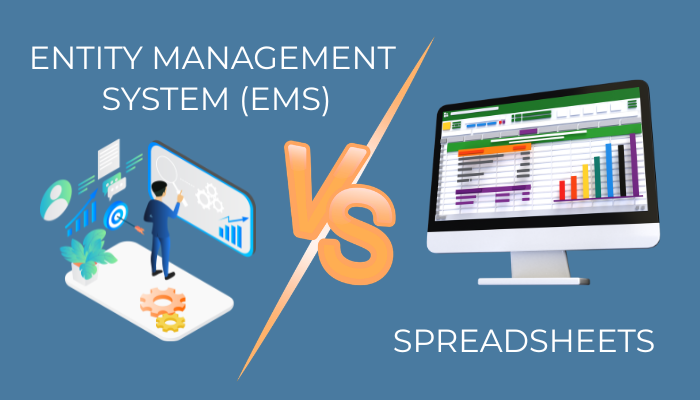
An Entity Management System (EMS) is a dedicated software platform that centralizes a company’s corporate record — directors, shareholders, licenses, filings, and governing documents — into a single, auditable source of truth. Organizations typically adopt one when spreadsheet-based tracking starts producing missed filing deadlines, conflicting data versions, or governance blind spots across multiple entities and jurisdictions.

Why Spreadsheets Break Down as You Grow

Every company starts somewhere simple: one entity, one spreadsheet, one person who “knows where everything is.” That works — until it doesn’t.

As organizations grow, corporate structure grows with them: new subsidiaries, joint ventures, holding companies, and foreign registrations pile up, often faster than internal processes do. At that point, spreadsheet-based entity tracking becomes a genuine operational risk, not just an inconvenience. The failure modes are predictable and recurring:

  • Data silos. Legal keeps its own tracker. Finance keeps another. Tax keeps a third. None of them reconcile automatically, and each team ends up asking “which version is correct?” during audits or board requests.
  • Version confusion. A director resignation or a change in registered address gets updated in one file but not another. Weeks later, a filing goes out with stale information.
  • Missed deadlines. Annual returns, franchise tax filings, license renewals — each jurisdiction has its own calendar, and spreadsheets have no memory. Nobody gets reminded until the penalty notice arrives.
  • No audit trail. When a regulator, acquirer, or auditor asks “who approved this and when,” a spreadsheet can’t reconstruct that history — there’s no changelog, no timestamp, no accountability record.

These aren’t hypothetical risks. Missed statutory filings can trigger late penalties, loss of good standing, or even involuntary dissolution in some jurisdictions — and losing good standing can complicate financing rounds, M&A due diligence, and banking relationships at the worst possible time.

What Is an Entity Management System (EMS)?

An Entity Management System is a software platform purpose-built to manage the corporate record — the complete, authoritative set of data and documents that define how each legal entity in a group is structured, owned, and governed. Rather than living across disconnected spreadsheets and shared drives, this data lives in one system that legal, tax, finance, and compliance teams all draw from.

At its core, an EMS answers questions that should be simple but often aren’t in a spreadsheet-based setup: Who are the current directors of our Singapore subsidiary? When does our license in Brazil expire? Who owns what percentage of our German entity, and has that changed in the last two years?

Key Benefits of Adopting an EMS

Centralized Data

Legal, tax, and finance teams get instant, shared access to organizational charts, entity details, and ownership structures — instead of requesting an update from whoever last touched the spreadsheet. This matters most during time-sensitive events: financing rounds, restructurings, or regulatory inquiries, where “we’ll get back to you” isn’t an acceptable answer.

Automated Alerts

Filing deadlines, license renewals, and director term expirations are tracked automatically, with notifications sent ahead of time — not discovered after a penalty notice arrives. This shifts compliance from reactive (responding to problems) to proactive (preventing them).

Document Repository

Articles of incorporation, bylaws, board minutes, share certificates, and powers of attorney are stored securely in one place, linked directly to the entity they belong to. When due diligence requests come in during an acquisition or financing round, documents are retrievable in minutes instead of days.

Reporting

Complex reports — ownership structures, director appointments, entity charts by jurisdiction — can be generated in seconds rather than reconstructed manually. This is particularly valuable for board reporting, regulatory disclosures, and beneficial ownership reporting requirements, which increasingly demand exactly this kind of structured output.

Spreadsheets vs. an EMS: A Side-by-Side Comparison

Factor Spreadsheets Entity Management System
Single source of truth No — multiple versions across teams Yes — one authoritative record
Deadline tracking Manual, memory-dependent Automated alerts
Audit trail None or minimal Full change history
Document storage Scattered across drives/email Centralized, linked to each entity
Reporting speed Hours to days (manual compilation) Minutes (generated on demand)
Access control Difficult to manage/restrict Role-based permissions
Scales with entity count Poorly — risk compounds with each new entity Designed for multi-entity, multi-jurisdiction structures

When Should a Company Adopt an EMS?

There’s no fixed headcount or entity-count threshold, but a few signals reliably indicate it’s time:

  • You’ve crossed roughly 5–10 legal entities, especially across more than one jurisdiction
  • You’ve had at least one missed filing or late-penalty incident in the past 12 months
  • More than one team maintains its own version of entity data
  • You’re preparing for financing, an acquisition, or an IPO, where due diligence will scrutinize your corporate record directly
  • Your beneficial ownership or governance reporting obligations have expanded (a trend accelerating globally as regulators demand more transparency into corporate structures)

Frequently Asked Questions

What’s the difference between an EMS and a document management system? A general document management system stores files. An EMS is purpose-built around legal entities as the organizing structure — every document, deadline, and data point is linked to a specific entity, director, or filing obligation, not just stored in a folder.

Does an EMS replace legal counsel or a corporate services provider? No. An EMS is the system of record; it doesn’t file documents with regulators or provide legal advice on its own. Many organizations pair an EMS with managed compliance services so the platform stays current without internal teams handling data entry themselves.

How does an EMS help during M&A or fundraising due diligence? Due diligence requests typically ask for cap tables, director histories, good-standing certificates, and governing documents across every entity in the group. With an EMS, these are already centralized and exportable, which can meaningfully shorten diligence timelines compared to reconstructing records from spreadsheets and email threads.

Is an EMS only useful for large multinational companies? No — the tipping point is entity complexity, not company size. A mid-sized company with five subsidiaries across three countries faces the same version-control and deadline risks as a much larger company, just at a smaller scale.

How CORPIYA Helps

CORPIYA provides a state-of-the-art Entity Management System tailored for global businesses. Our platform integrates seamlessly with our managed services, meaning our team keeps your data updated for you — so you get the transparency and control of a digital platform without the administrative burden of data entry.

Planning to digitize your corporate records? Reach out to us at contact@corpiya.com to discuss how we can support your next steps.

Put These Insights Into Action

Talk to our team about how this applies to your operations — wherever your business takes you, Corpiya is ready to support your next move.

Get In Touch

Contact - Send us a message

Related Insights

Back to All Insights