
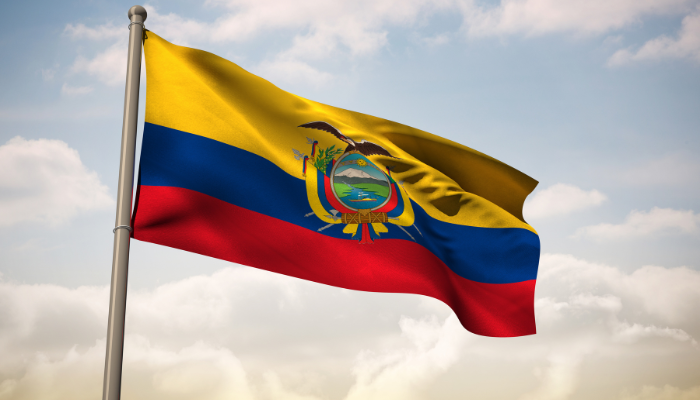
Ecuador is one of the more overlooked markets in Latin America for foreign expansion, in part because it doesn’t carry the market size of Brazil or Mexico — but it offers something neither of those markets does: a fully dollarized economy. Every price, payroll run, and contract in Ecuador is denominated in U.S. dollars, which removes an entire category of currency risk that shapes how companies plan an entry into almost every other market in the region.
That doesn’t make Ecuador simpler to enter than its neighbors — entity formation, labor compliance, and tax registration still require the same discipline any Latin American market does. Here is a practical Ecuador market entry guide.
1) Market Overview
Ecuador has used the U.S. dollar as its official currency since 2000, which removes exchange-rate volatility as a planning variable — a meaningful simplification for companies that have found currency risk to be one of the harder parts of budgeting for expansion elsewhere in Latin America. The economy is built on oil, agricultural exports (bananas, shrimp, cacao, and cut flowers are major categories), and a growing services sector, with Quito and Guayaquil serving as the country’s two primary commercial hubs.
Ecuador is also a member of the Andean Community, giving companies that establish an Ecuadorian entity a regional trade relationship with Colombia, Peru, and Bolivia. The regulatory environment is more straightforward than some of its neighbors’, though foreign investors still need to work through Ecuador’s company registry and tax authority in the correct sequence to operate legally.
2) Entity Setup
Company formation in Ecuador typically means incorporating a Sociedad Anónima or a Compañía Limitada, registering with the Superintendencia de Compañías (Ecuador’s corporate registry), and securing a RUC tax ID from the SRI (Servicio de Rentas Internas) before the entity can legally invoice or hire. Business registration in Ecuador runs through these two bodies, with the Compañía Limitada generally preferred by smaller foreign-owned subsidiaries and the Sociedad Anónima more common for larger operations or those anticipating outside investment.
Companies not ready to incorporate can hire through an employer of record (EOR) in Ecuador instead, which becomes the legal employer of local staff without requiring entity formation first — useful for testing the market or making a first hire before committing further.
3) Compliance Basics
Payroll services in Ecuador need to account for two statutory bonuses: décimo tercer sueldo (a 13th-month payment made in December) and décimo cuarto sueldo (a 14th-month payment tied to the school calendar, paid in different months depending on the region), plus mandatory contributions to the IESS, Ecuador’s social security institute. HR outsourcing in Ecuador typically covers this payroll cycle along with onboarding and compliance tracked against Ministerio del Trabajo requirements.
Tax compliance in Ecuador centers on SRI registration, monthly VAT and withholding filings, and income tax returns, while corporate secretarial services in Ecuador cover the annual filings and reporting the Superintendencia de Compañías requires to keep an entity in good standing. Accounting services in Ecuador cover statutory bookkeeping and the SRI-linked filings above — and because Ecuador’s currency is the U.S. dollar, financial reporting for a U.S. parent company involves one less layer of currency translation than most other markets in the region.
4) Why Expand to Ecuador
Ecuador’s dollarization is the standout reason companies add it to a Latin American footprint: it removes currency risk from pricing, payroll, and repatriation decisions in a way no other market in the region can offer. Combined with Andean Community trade access and a natural-resource and agricultural export base that has proven durable, Ecuador is a reasonable next step for companies already operating in Colombia or Peru that want a third Andean market without adding currency exposure to the mix.
Corpiya Can Help You Succeed
Corpiya supports companies expanding into Ecuador across company formation, payroll and EOR, and accounting and tax compliance. For the full breakdown of services and country-specific requirements, see our complete guide to expanding your business to Ecuador. This guide is part of Corpiya’s broader International Business Expansion Guide — see the full framework for choosing a market and entry model.
If you’re ready to enter the Ecuadorian market with confidence, reach out to Corpiya at contact@corpiya.com or fill out the form below to start building your roadmap for success.
Disclaimer: This article is provided for general informational purposes only and does not constitute legal advice. Sebastien Gaddini is licensed to practice law in New York; this piece addresses business-expansion and compliance topics in a non-legal, informational capacity and should not be relied upon as legal counsel. For advice specific to your situation, consult a qualified attorney licensed in the relevant jurisdiction.

Put These Insights Into Action
Talk to our team about how this applies to your operations — wherever your business takes you, Corpiya is ready to support your next move.
Get In Touch
Related Insights
-

The Letter of Intent Explained: Setting M&A Ground Rules
Learn what is an LOI in M&A and how it sets deal ground rules, from price to exclusivity and risk…
-

The Practical Guide to Building a Flexible Legal Consulting Career
Learn how to build a thriving career as freelance legal counsel with this practical guide on pricing, AI governance, and…
-

Consult the Office of Corporation Counsel for Municipal Compliance
Learn how the Office of Corporation Counsel ensures municipal compliance, manages litigation, and advises city agencies.