

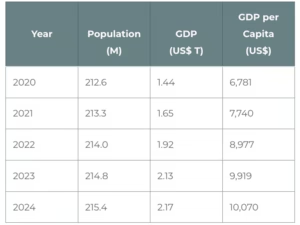
Brazil is the largest economy in Latin America and one of the most attractive destinations for international expansion. With a population exceeding 215 million, a diversified industrial base, and strong domestic consumption, Brazil offers significant opportunities across sectors such as technology, manufacturing, agribusiness, energy, retail, and financial services.
At the same time, Brazil’s regulatory complexity and tax environment require careful planning and local expertise to ensure a successful market entry. Here is a step-by-step Brazil market entry guide
This guide is part of Corpiya’s broader International Business Expansion Guide — see the full framework for choosing a market and entry model.
1) Conduct Comprehensive Market Research
A successful Brazil market entry strategy begins with a clear understanding of the market, customers, competitors, and regional differences. Brazil is not a uniform market: consumer behavior, purchasing power, infrastructure, and business conditions can vary significantly across states and regions.
Key areas to assess include:
- Market demand: Evaluate the size of the addressable market, customer needs, purchasing behavior, and expected demand for your products or services.
- Regional differences: São Paulo, Rio de Janeiro, the South, and the Northeast can present substantially different commercial opportunities, costs, and customer profiles.
- Consumer and digital trends: Brazil has a large and highly connected consumer base, creating opportunities in e-commerce, digital services, fintech, technology, and mobile commerce.
- Competitive landscape: Identify established local and international competitors, pricing models, distribution channels, and potential gaps in the market.
- Market barriers: Assess import requirements, local regulations, taxation, infrastructure, licensing, and other factors that could affect market access.
- Local partners and channels: Determine whether distributors, agents, strategic partners, or local service providers are necessary to reach customers efficiently.
The objective of Brazil market research is not simply to determine whether demand exists. It is to establish where the opportunity is, who the target customers are, how the market operates, and what resources are required to compete effectively.
2) Choose Your Market Entry Model
Once market demand and competitive conditions have been validated, the next step is determining how your company will establish and operate in Brazil. The appropriate market entry model depends on factors such as investment requirements, regulatory obligations, control over operations, tax considerations, and long-term growth objectives.
Common approaches include:
- Direct export: Selling products into Brazil through cross-border channels can be appropriate for companies testing demand before establishing a local presence.
- Distributor or local partner: Working with an established Brazilian company can provide access to local customers, distribution networks, and market knowledge while reducing the initial operational burden.
- Commercial representation: Local representatives or agents may help develop business relationships and sales opportunities without requiring the same operational footprint as a fully established subsidiary.
- Brazilian subsidiary or local entity: Companies pursuing long-term operations, hiring employees, signing local contracts, invoicing customers, or establishing a substantial presence may benefit from forming a Brazilian legal entity.
- Joint venture or strategic partnership: A local partnership can provide market knowledge, relationships, infrastructure, and sector-specific expertise while sharing investment and operational responsibilities.
The right Brazil market entry model should be evaluated alongside company formation, taxation, employment, licensing, foreign investment, and operational requirements. Choosing the wrong structure can create unnecessary costs, compliance obligations, and limitations on future growth.
For companies planning a permanent presence, the decision should therefore be based not only on the fastest way to enter Brazil, but on the structure that provides the best balance of control, compliance, cost, scalability, and long-term commercial objectives.
3) Legal and Regulatory Framework
Brazil’s regulatory environment is complex and requires expert navigation:
-
Company formation: Common structures include the Limitada (Ltda.) and Sociedade Anônima (S.A.).
-
Tax system: Brazil has one of the most complex tax regimes globally, with federal, state, and municipal taxes.
-
Employment laws: Labor regulations are detailed and must be strictly followed to avoid penalties.
4) Cultural and Operational Considerations
-
Language: Portuguese is essential for contracts, operations, and customer engagement.
-
Relationship-driven business culture: Trust and long-term partnerships are highly valued.
-
Operational complexity: Logistics, customs clearance, and compliance vary by state.
5) Marketing and Go‑to‑Market Strategy
-
Localized marketing: Portuguese-language content and Brazil-specific SEO are essential.
-
Digital channels: Social media, marketplaces, and mobile commerce are key growth drivers.
-
Pricing strategy: Must account for taxes, import duties, and regional purchasing power.
6) Manage Risk Proactively
Entering the Brazilian market presents meaningful opportunities, but it also comes with distinct risks that must be actively managed. Regulatory complexity, economic volatility, and operational challenges can affect timelines, costs, and long-term profitability if not addressed early.
A proactive risk management approach—supported by local expertise and strong governance—helps companies protect their investment and maintain operational stability as they scale.
-
Regulatory risk: Frequent tax and regulatory changes require ongoing monitoring and local compliance expertise.
-
Currency volatility: Exchange rate fluctuations can impact pricing, cash flow, and profitability.
-
Operational risk: Strong local partners, clear contracts, and compliance controls are essential to reduce exposure.
Key Brazil Market Data (2020–2024)
The following indicators highlight why Brazil remains a strategic market for foreign investors:
Sources: World Bank, IMF, IBGE
These figures underscore Brazil’s market scale, purchasing power, and long-term growth potential, making it a cornerstone for regional Latin American strategies.
Corpiya Market Entry & Company Formation Services
Entering the Brazilian market successfully requires expert guidance across strategy, legal setup, and compliance. Corpiya supports international companies with end-to-end market entry and company formation services in Brazil, including entity incorporation, tax and regulatory alignment, and operational setup. For the full breakdown of services and country-specific requirements, see our complete guide to expanding your business to Brazil.
By combining local expertise with a structured expansion framework, Corpiya helps businesses reduce complexity, manage risk, and establish a compliant, scalable presence in Brazil—one of Latin America’s most challenging yet rewarding markets.
Positioning Your Business for Success in Brazil
Brazil offers unmatched scale and opportunity in Latin America, but success depends on thorough planning, regulatory compliance, and local execution. Companies that approach market entry with a clear strategy and experienced local support—such as Corpiya’s market entry and company formation services—are best positioned to achieve sustainable growth and long-term success.
If you’re ready to enter the Brazilian market with confidence, reach out to Corpiya at contact@corpiya.com or fill out the form below to start building your roadmap for success.
Disclaimer: This article is provided for general informational purposes only and does not constitute legal advice. Sebastien Gaddini is licensed to practice law in New York; this piece addresses business-expansion and compliance topics in a non-legal, informational capacity and should not be relied upon as legal counsel. For advice specific to your situation, consult a qualified attorney licensed in the relevant jurisdiction.

Put These Insights Into Action
Talk to our team about how this applies to your operations — wherever your business takes you, Corpiya is ready to support your next move.
Get In Touch
Related Insights
-
Entity Management System vs. Spreadsheets: Why Companies Make the Switch
Spreadsheets work fine for one or two entities. Past that, they quietly become the biggest risk in your compliance process.…
-

How to Outsource International Back-Office Operations Without Losing Control
Companies that expand into new markets usually replicate their domestic back office locally, country by country — hiring a separate…
-
How Long Does Company Formation Take in Latin America? A Market-by-Market Timeline
Company formation timelines vary widely across Mexico, Brazil, Colombia, Chile, Peru, Ecuador, and Argentina — and the step that actually…