
Brazil Expansion Playbook: From Market Research to Company Formation

Brazil Expansion Playbook: From Market Research to Company Formation

Brazil is the largest economy in Latin America and one of the most attractive destinations for international expansion. With a population exceeding 215 million, a diversified industrial base, and strong domestic consumption, Brazil offers significant opportunities across sectors such as technology, manufacturing, agribusiness, energy, retail, and financial services.

At the same time, Brazil’s regulatory complexity and tax environment require careful planning and local expertise to ensure a successful market entry. Here is a step-by-step Brazil market entry guide

1) Conduct Comprehensive Market Research

A successful Brazil market entry strategy begins with a clear understanding of the market, customers, competitors, and regional differences. Brazil is not a uniform market: consumer behavior, purchasing power, infrastructure, and business conditions can vary significantly across states and regions.

Key areas to assess include:

  • Market demand: Evaluate the size of the addressable market, customer needs, purchasing behavior, and expected demand for your products or services.
  • Regional differences: São Paulo, Rio de Janeiro, the South, and the Northeast can present substantially different commercial opportunities, costs, and customer profiles.
  • Consumer and digital trends: Brazil has a large and highly connected consumer base, creating opportunities in e-commerce, digital services, fintech, technology, and mobile commerce.
  • Competitive landscape: Identify established local and international competitors, pricing models, distribution channels, and potential gaps in the market.
  • Market barriers: Assess import requirements, local regulations, taxation, infrastructure, licensing, and other factors that could affect market access.
  • Local partners and channels: Determine whether distributors, agents, strategic partners, or local service providers are necessary to reach customers efficiently.

The objective of Brazil market research is not simply to determine whether demand exists. It is to establish where the opportunity is, who the target customers are, how the market operates, and what resources are required to compete effectively.

2) Choose Your Market Entry Model

Once market demand and competitive conditions have been validated, the next step is determining how your company will establish and operate in Brazil. The appropriate market entry model depends on factors such as investment requirements, regulatory obligations, control over operations, tax considerations, and long-term growth objectives.

Common approaches include:

  • Direct export: Selling products into Brazil through cross-border channels can be appropriate for companies testing demand before establishing a local presence.
  • Distributor or local partner: Working with an established Brazilian company can provide access to local customers, distribution networks, and market knowledge while reducing the initial operational burden.
  • Commercial representation: Local representatives or agents may help develop business relationships and sales opportunities without requiring the same operational footprint as a fully established subsidiary.
  • Brazilian subsidiary or local entity: Companies pursuing long-term operations, hiring employees, signing local contracts, invoicing customers, or establishing a substantial presence may benefit from forming a Brazilian legal entity.
  • Joint venture or strategic partnership: A local partnership can provide market knowledge, relationships, infrastructure, and sector-specific expertise while sharing investment and operational responsibilities.

The right Brazil market entry model should be evaluated alongside company formation, taxation, employment, licensing, foreign investment, and operational requirements. Choosing the wrong structure can create unnecessary costs, compliance obligations, and limitations on future growth.

For companies planning a permanent presence, the decision should therefore be based not only on the fastest way to enter Brazil, but on the structure that provides the best balance of control, compliance, cost, scalability, and long-term commercial objectives.

3) Legal and Regulatory Framework

Brazil’s regulatory environment is complex and requires expert navigation:

  • Company formation: Common structures include the Limitada (Ltda.) and Sociedade Anônima (S.A.).

  • Tax system: Brazil has one of the most complex tax regimes globally, with federal, state, and municipal taxes.

  • Employment laws: Labor regulations are detailed and must be strictly followed to avoid penalties.

4) Cultural and Operational Considerations

  • Language: Portuguese is essential for contracts, operations, and customer engagement.

  • Relationship-driven business culture: Trust and long-term partnerships are highly valued.

  • Operational complexity: Logistics, customs clearance, and compliance vary by state.

5) Marketing and Go‑to‑Market Strategy

  • Localized marketing: Portuguese-language content and Brazil-specific SEO are essential.

  • Digital channels: Social media, marketplaces, and mobile commerce are key growth drivers.

  • Pricing strategy: Must account for taxes, import duties, and regional purchasing power.

6) Manage Risk Proactively

Entering the Brazilian market presents meaningful opportunities, but it also comes with distinct risks that must be actively managed. Regulatory complexity, economic volatility, and operational challenges can affect timelines, costs, and long-term profitability if not addressed early.

A proactive risk management approach—supported by local expertise and strong governance—helps companies protect their investment and maintain operational stability as they scale.

  • Regulatory risk: Frequent tax and regulatory changes require ongoing monitoring and local compliance expertise.

  • Currency volatility: Exchange rate fluctuations can impact pricing, cash flow, and profitability.

  • Operational risk: Strong local partners, clear contracts, and compliance controls are essential to reduce exposure.

Key Brazil Market Data (2020–2024)

The following indicators highlight why Brazil remains a strategic market for foreign investors:
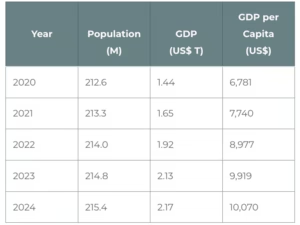
Sources: World Bank, IMF, IBGE

These figures underscore Brazil’s market scale, purchasing power, and long-term growth potential, making it a cornerstone for regional Latin American strategies.

Corpiya Market Entry & Company Formation Services

Entering the Brazilian market successfully requires expert guidance across strategy, legal setup, and compliance. Corpiya supports international companies with end-to-end market entry and company formation services in Brazil, including entity incorporation, tax and regulatory alignment, and operational setup.

By combining local expertise with a structured expansion framework, Corpiya helps businesses reduce complexity, manage risk, and establish a compliant, scalable presence in Brazil—one of Latin America’s most challenging yet rewarding markets.

Positioning Your Business for Success in Brazil

Brazil offers unmatched scale and opportunity in Latin America, but success depends on thorough planning, regulatory compliance, and local execution. Companies that approach market entry with a clear strategy and experienced local support—such as Corpiya’s market entry and company formation services—are best positioned to achieve sustainable growth and long-term success.

If you’re ready to enter the Brazilian market with confidence, reach out to Corpiya at info@corpiya.com or fill out the form below to start building your roadmap for success.

Put These Insights Into Action

Talk to our team about how this applies to your operations — wherever your business takes you, Corpiya is ready to support your next move.

Get In Touch

Contact - Send us a message

Related Insights

Back to All Insights

Practical Guide to Market Entry in Colombia: Strategies for Success

Practical Guide to Market Entry in Colombia: Strategies for Success

Colombia is one of Latin America’s most dynamic economies, offering significant opportunities for international businesses. With a population of over 51 million and strategic access to both the Pacific and Atlantic markets, Colombia serves as a gateway to the Andean region.

However, entering the Colombian market requires a clear strategy, understanding of local regulations, and cultural adaptation. This practical guide provides actionable steps for companies aiming to expand to Colombia successfully.

1) Conduct Comprehensive Market Research

A successful entry into Colombia begins with understanding the consumer landscape:

  • Digital penetration: ~63% of the population uses the internet, indicating strong potential for digital and e‑commerce strategies. Trade.gov

  • Urban centers: Bogotá, Medellín, and Cali are key commercial hubs with strong logistics and financial ecosystems.

2) Choose Your Market Entry Model

Common approaches include:

  • Exporting: Lower cost; ideal for testing demand.

  • Joint Ventures: Local partner can help navigate regulations and build relationships.

  • Subsidiary / Branch: Best for full operational control.

  • Franchising / Licensing: Effective for retail and service brands.

3) Legal and Regulatory Framework

Foreign companies must comply with Colombian laws:

  • Company setup: The Simplified Joint Stock Company (SAS) is the most flexible and common legal structure.

  • Tax compliance: Understand VAT, corporate tax, and customs duties.

  • Employment law: Ensure compliance with local labor laws and benefits.

4) Understand Cultural and Operational Considerations

Local knowledge is invaluable:

  • Language proficiency: Spanish is essential for customer communication, marketing, and legal procedures.

  • Business culture: Relationship building and trust are critical in negotiations.

  • Payment trends: While digital payments grow, cash and bank transfers remain important.

5) Build A Targeted Go‑to‑Market Strategy

Focus on:

  • Digital marketing & local SEO: Tailor content in Spanish and optimize for Colombia‑specific search intent.

  • Local partnerships: Collaborate with distributors and trade networks.

  • Pricing strategy: Consider purchasing power and regional economic disparities.

6) Manage Risk Proactively

Important risk considerations include:

  • Economic volatility: Monitor exchange rates and GDP trends.

  • Trade balance trends: Colombia shows trade imbalances, which can affect import/export costs.

  • Foreign investment flows: Stay informed on FDI regulations and national sentiment.

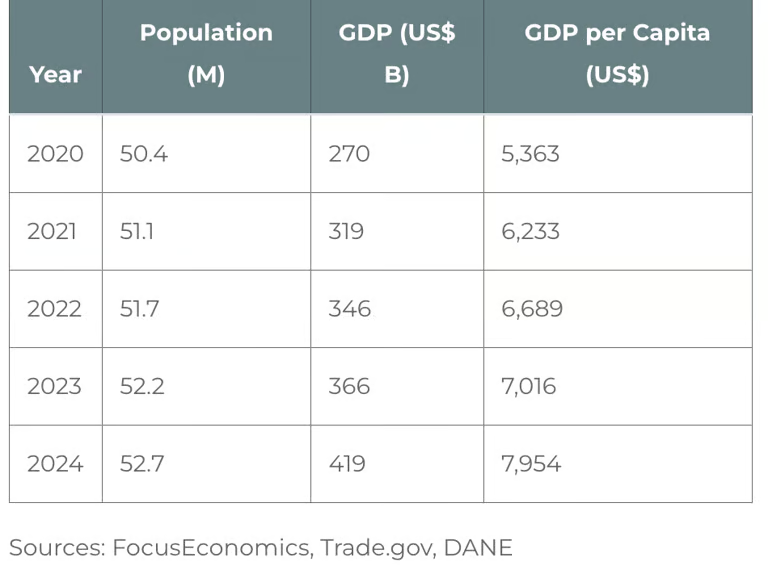
Key Colombia Market Data (2020–2024)

Below is a snapshot of essential economic and demographic indicators to guide market entry decisions:

Corpiya Can Help You Succeed

Successfully entering the Colombian market requires more than strategy—it demands hands-on support from local experts. Corpiya provides comprehensive market entry and company formation services tailored to international businesses.

From registering your Simplified Joint Stock Company (SAS) and navigating taxation, to establishing local operations and compliance, Corpiya helps companies move from planning to execution with confidence. With our insights into the Colombian market and regulatory landscape, your business can accelerate growth, minimize risks, and seize opportunities in Latin America.

Is Colombia Right For Your Business?

With solid economic growth, increasing internet adoption, and an expanding consumer base, Colombia remains an attractive destination for market entry—if supported by strong research, local partnerships, and cultural insight. The data above underscores both the opportunities and pragmatic steps needed to establish a sustainable presence.

If you’re ready to enter the Colombian market with confidence, reach out to Corpiya at info@corpiya.com or fill out the form below to start building your roadmap for success.

Put These Insights Into Action

Talk to our team about how this applies to your operations — wherever your business takes you, Corpiya is ready to support your next move.

Get In Touch

Contact - Send us a message

Related Insights

Back to All Insights

Why Strong Corporate Services Are the Backbone of Global Growth

Why Strong Corporate Services Are the Backbone of Global Growth

In today’s global economy, opportunities for expansion have never been greater — but neither have the complexities that come with them. From navigating multi-jurisdictional compliance to maintaining accurate records and governance, businesses must balance agility with structure.

At Corpiya, we believe that sustainable growth begins not just with vision, but with the right foundation. Corporate services — often operating behind the scenes — form the invisible framework that enables companies to scale efficiently, operate confidently, and remain compliant wherever they do business.

The Foundation of Corporate Stability

A company’s legal and operational structure defines how it grows, how it’s governed, and how it’s perceived by stakeholders. Without a sound foundation, even the most innovative businesses can falter.

Corporate services encompass the essentials that keep organizations steady — from company formation and annual compliance to corporate secretarial and registered office services. These aren’t just administrative requirements; they’re the framework that ensures accountability, transparency, and long-term resilience.

When your structure is managed properly, you reduce risk, improve governance, and create space to focus on what matters most — your core business.

Building a Foundation for the Future

The corporate world is shifting toward agility — and that requires strong infrastructure. Companies that integrate compliance, governance, and transparency into their DNA are the ones that sustain success over time.

Corpiya helps organizations future-proof their structures through:

  • Strategic entity formation and management

  • Annual and statutory compliance oversight

  • Corporate secretarial support

  • Legal representation and registered office solutions

Our holistic approach enables companies to operate with confidence, scale efficiently, and maintain their reputation in every jurisdiction.

Why Businesses Trust Advisors for Expansion

At their core, advisory services are about confidence and clarity. Leaders can move forward knowing that every decision—from entity setup to merger integration—is backed by expert insight and proven strategy. By leveraging both global knowledge and local expertise, businesses gain:

  • Clearer pathways into new markets

  • Stronger decision-making supported by data and analysis

  • Streamlined compliance and tax processes

  • Long-term strategies designed for scalability and sustainability

Turning Corporate Services Into Competitive Strength

Behind every successful organization lies a strong foundation — one built on structure, compliance, and governance. Corporate services may not always take the spotlight, but they’re what allow innovation, strategy, and growth to flourish.

At Corpiya, we help businesses turn corporate infrastructure into a strategic advantage—bringing together entity management, compliance, governance, and local expertise so every part of your organization is positioned to support sustainable growth. Whether you’re entering a new market, restructuring your global footprint, or managing an increasingly complex corporate structure, Corpiya provides the clarity and control to move forward with confidence.

Ready to build a stronger foundation for your next stage of growth? Contact us at info@corpiya.com or fill out the form below to explore how Corpiya can support your global expansion.

Put These Insights Into Action

Talk to our team about how this applies to your operations — wherever your business takes you, Corpiya is ready to support your next move.

Get In Touch

Contact - Send us a message

Related Insights

Back to All Insights

Mexico Is Booming — But Is It the Right Move for Your Business?

Mexico Is Booming — But Is It the Right Move for Your Business?

Expanding into a new market is exciting, but getting it right requires more than choosing the next country on your growth map. Mexico has become a top destination for companies looking to nearshore, scale operations, or tap into a thriving consumer base. With its strategic location, strong trade ties, and growing talent pool, the opportunity is undeniable. But entering Mexico without understanding its business environment can lead to costly delays and compliance headaches.

That’s why companies need a clear roadmap before stepping in. Mexico’s market is full of potential, but it also comes with unique regulations, regional differences, and cultural expectations that shape how business gets done. A thoughtful market-entry strategy can determine whether your expansion thrives or stalls. Here’s what you need to know before making the move.

Key Opportunities and Challenges in Mexico

  • Massive Trade Potential — Mexico is one of the U.S.’s top trading partners, offering export and nearshoring advantages

  • Growing Digital Economy — Strict regulations around data make having local infrastructure or cloud solutions a smart play.

  • Regulatory Complexity — Foreign companies need to navigate legal entity structures, foreign investment rules, and potential antitrust concerns.

  • Labor Laws & Hiring — Mexican labor law includes mandatory benefits, severance, and compliance with social security (IMSS).

  • Establishing Local Presence — Setting up a legal entity or working through local agents or distributors is often necessary to scale effectively.

  • Trade Incentives & Regional Presence — Because Mexico is divided into key commercial hubs, a regionally tailored strategy is often more effective.

  • Digital Data Regulations — Tech or digital service companies often must store certain data locally.

  • Tax & Customs Requirements — IMMEX program compliance and import/export documentation are critical for operational success.

How Companies Can Approach the Mexican Market

Entering Mexico successfully requires balancing strategy with local insights. Companies often start by identifying key regions—Mexico City, Guadalajara, Monterrey, and Baja California—to ensure their distribution or service coverage is efficient. Partnering with local distributors, agents, or strategic allies can also reduce risk and accelerate entry, especially in industries with heavy regulation or strong competition.

Understanding cultural expectations is just as important as regulatory compliance. Building trust with Mexican partners, communicating consistently, and respecting business norms can open doors that a purely transactional approach cannot. Companies that invest in both operational planning and relationship-building often see faster adoption, smoother operations, and better long-term growth.

Corpiya Can Help You Succeed

Expanding into Mexico can feel complex, but Corpiya is positioned to support businesses across Corporate, HR, Advisory, BPO, and Technology Services. We help companies navigate regulations, manage local operations, optimize their workforce, and implement the right strategies for growth. With Corpiya as a partner, your business can focus on scaling while providing the expertise and infrastructure to make the expansion smooth and successful.

If you’re ready to enter the Mexican market with confidence, reach out to Corpiya at info@corpiya.com or fill out the form below to start building your roadmap for success.

Put These Insights Into Action

Talk to our team about how this applies to your operations — wherever your business takes you, Corpiya is ready to support your next move.

Get In Touch

Contact - Send us a message

Related Insights

Back to All Insights

Updated Anti-Money Laundering Law is Here: Is Your Business Ready for EU Ownership Transparency?

Updated Anti-Money Laundering Law is Here: Is Your Business Ready for EU Ownership Transparency?

The EU is raising the bar on transparency—and it could affect your business sooner than you think. But what does this really mean, and how can you prepare without getting lost in the complexity?

The Sixth Anti-Money Laundering Directive (AMLD6), along with the Anti-Money Laundering Regulation (AMLR) and the new AML Authority (AMLA), is the EU’s most comprehensive update to combat money laundering and terrorist financing. These rules will change how companies track, report, and verify beneficial ownership—and noncompliance can carry serious consequences, from fines to reputational damage.

Why Beneficial Ownership Transparency Matters

Have you ever wondered who truly owns a company? That’s exactly what AMLD6 wants to clarify. The directive ensures that the “real owners” of companies, trusts, and other legal arrangements are clearly documented and accessible to authorities—and even to the public under certain circumstances.

Member States will maintain central beneficial ownership registers with detailed, up-to-date information. Bank, payment, securities, and crypto accounts will also be traceable through interconnected EU systems. Financial Intelligence Units (FIUs) gain expanded powers to analyze transactions, suspend suspicious activity, and cooperate across borders—all while protecting fundamental rights.

For businesses, this means one thing: transparency is no longer optional. Getting it right reduces risk, prevents financial crime, and builds trust with partners, investors, and regulators.

How Corpiya Supports Compliance

AMLD6’s requirements touch on areas where Corpiya’s solutions naturally support businesses:

Entity Management & Compliance
Companies must maintain accurate, up-to-date ownership records. Corpiya centralizes and automates these records, making it easier to comply with beneficial ownership disclosure rules.

Global Corporate Secretarial Support
Different EU jurisdictions may implement AMLD6 in varying ways. Corpiya helps businesses manage filings, ownership updates, and regulatory reporting across all markets, ensuring consistent compliance.

Data Management & Transparency Tools
With transparency at the heart of AMLD6, Corpiya’s secure data solutions allow ownership information to be stored, tracked, and accessed for audits or regulatory checks, helping meet EU standards for disclosure and accountability.

Preparing for the Future

Deadlines for AMLD6 transposition range from 2025 to 2029, giving companies time—but not forever.

To stay ahead, businesses should:

  • Review AML and CFT policies

  • Strengthen beneficial ownership verification

  • Use technology for monitoring and reporting

  • Conduct risk assessments across all operations

The right preparation today allows organizations to navigate AMLD6 confidently while keeping operations smooth and compliant.

Don’t Wait to Get Compliant

AMLD6 isn’t just a regulatory hurdle—it’s a chance to strengthen transparency, reduce risk, and build trust across your organization. Corpiya makes compliance simpler, safer, and smarter.

The benefits of Corpiya’s services in supporting compliance with AMLD6 can be seen across entity management, corporate secretarial support, and data transparency—helping businesses meet the directive’s requirements with confidence.

Reach out to info@corpiya.com or fill out the form below to start simplifying compliance and regulatory requirements for your business.

Put These Insights Into Action

Talk to our team about how this applies to your operations — wherever your business takes you, Corpiya is ready to support your next move.

Get In Touch

Contact - Send us a message

Related Insights

Back to All Insights

LLC or Corporation: Which Is Right for Your Business Structure?

LLC or Corporation: Which Is Right for Your Business Structure?

Choosing how to structure your business is one of the most important legal decisions you’ll ever make. The right choice can protect your personal assets, optimize taxes, and set your company up for growth. The wrong one can lead to unnecessary complexity—or worse, exposure to risk.

At Corpiya Counsel, we help business owners make this decision with confidence through transparent, subscription-based legal support that eliminates hourly billing surprises. Let’s break down the differences between an LLC and a Corporation, and how to decide which best fits your goals.

What Is an LLC?

A Limited Liability Company (LLC) is a flexible business structure that combines the simplicity of a sole proprietorship with the liability protection of a corporation. It’s often the go-to choice for small businesses, freelancers, and startups that want legal protection without the formality of corporate governance.

Key benefits of an LLC:

  • Limited liability protection: Owners (called members) aren’t personally liable for business debts.

  • Flexible management: You can run the company yourself or appoint managers.

  • Pass-through taxation: Profits and losses pass through to your personal tax return—no corporate taxes.

  • Fewer formalities: LLCs don’t require annual shareholder meetings or corporate minutes.

When an LLC makes sense:
If you’re running a small or medium-sized business that values flexibility, wants to minimize paperwork, and doesn’t plan to raise venture capital soon, an LLC is likely the best fit.

What Is a Corporation?

A Corporation is a more formal legal entity that’s separate from its owners (shareholders). It’s designed for businesses that want to raise capital, issue stock, or attract investors.

Key benefits of a corporation:

  • Investor-ready structure: Corporations can issue shares and attract outside investment.

  • Perpetual existence: The company continues even if ownership changes.

  • Potential tax advantages: Corporations can retain earnings and deduct benefits.

  • Enhanced credibility: Corporations often appear more established to banks and investors.

When a Corporation makes sense:
If you’re planning to scale, seek investors, or eventually go public, a corporation offers the structure and credibility you’ll need. However, it comes with stricter compliance requirements—like annual meetings, bylaws, and board oversight.

The Legal Bottom Line

Your business structure shapes everything—from how you pay taxes to how you make decisions and protect your assets. Choosing between an LLC and a Corporation isn’t just about paperwork—it’s about aligning your legal framework with your business goals.

That’s why Corpiya Counsel’s subscription-based legal plans make so much sense. Instead of paying unpredictable hourly fees, you get continuous legal guidance to structure, manage, and evolve your company as it grows—without worrying about every billable minute.

Final Thoughts

Whether you’re forming your first business or restructuring an existing one, getting the legal foundation right can save you time, money, and stress down the road.

At Corpiya Counsel, we believe in transparent, predictable legal support. Our subscription model gives you access to experienced corporate attorneys who help you choose, form, and maintain your business entity—so you can focus on building, not worrying.

Ready to find out which structure fits your business best?
Start your legal subscription with Corpiya Counsel today and get the clarity your company deserves. Email us at contact@corpiya-counsel.com to learn which subscription package fits your organization.

Put These Insights Into Action

Talk to our team about how this applies to your operations — wherever your business takes you, Corpiya is ready to support your next move.

Get In Touch

Contact - Send us a message

Related Insights

Back to All Insights

Why the Boring Stuff Builds Billion-Dollar Companies

Why the Boring Stuff Builds Billion-Dollar Companies

When leaders talk about scaling a company, they often focus on innovation, sales, or customer growth. Rarely does anyone mention company formation, accounting, or annual compliance as the secret to long-term success. Yet history shows that the businesses that endure—and grow into billion-dollar enterprises—are those that take corporate services seriously from day one.

What might feel like “boring” back-office work is, in reality, the architecture of credibility, resilience, and scalability. Let’s explore why.

Company Formation:
The Foundation of Growth

A company’s structure is more than paperwork—it’s the framework that determines how quickly you can expand into new markets, attract investors, and remain tax efficient. Businesses that rush through company formation often face costly restructuring later.

Practical takeaway: Treat company formation as a growth strategy, not an administrative task. The right jurisdiction, entity type, and ownership model will pay dividends for years.

Accounting and Treasury:
Turning Numbers Into Strategy

Accounting and treasury management aren’t just about balancing the books—they’re about controlling the levers of growth. Strong financial reporting gives investors confidence, while disciplined treasury practices protect liquidity during downturns.

Practical takeaway: Businesses that embed robust accounting early can pivot faster, scale more confidently, and make smarter investment decisions.

Tax and Audit:
Tools for Efficiency, Not Just Compliance

Tax planning and audits are often viewed as burdens. But businesses that treat them as strategic checkpoints gain efficiency and avoid unpleasant surprises. Proper tax structuring reduces liabilities, while transparent audits build trust with stakeholders.

Practical takeaway: Use tax and audit services to your advantage—don’t just “get through them.”

Annual Compliance:
Building Trust Through Consistency

Annual compliance may feel like a box-ticking exercise, but it signals maturity to regulators and investors. Businesses that consistently meet compliance requirements show they’re reliable, stable, and built to last.

Practical takeaway: Make compliance a steady rhythm, not a seasonal scramble.

Directorship:
Proactive Protection

Many companies only call their lawyers when trouble strikes. The smarter approach is integrating directorship from the start. Solid contracts, protected intellectual property, and well-managed risks reduce disputes and speed up business deals.

Practical takeaway: Preventing legal issues is always faster and cheaper than fixing them later.

Corporate Secretarial:
The Guardian of Governance

Corporate secretarial services might sound routine, but they’re the backbone of governance. Shareholder registers, meeting minutes, and statutory filings are often the first things investors review. Strong governance signals professionalism and investor-readiness.

Practical takeaway: Treat corporate secretarial work with the same seriousness as your financial reports—it’s a reflection of organizational discipline.

Registered Office:
More Than a Mailbox

Your registered office is more than an address—it’s a signal of stability. The right location strengthens credibility with regulators, clients, and partners, while ensuring critical communications are never missed.

Practical takeaway: A strategic registered office location can enhance your reputation and support business growth.

Streamlining Corporate Services for Sustainable Growth

The world’s most successful companies didn’t grow because they ignored the “boring stuff.” They grew because they mastered it. Corporate services—company formation, accounting, tax, compliance, legal representation, corporate secretarial work, and registered office solutions—aren’t just administrative necessities. They’re the systems that create investor confidence, regulatory trust, and long-term scalability.

When you get the fundamentals right, everything else—from fundraising to expansion—becomes easier. That’s why the “boring stuff” builds billion-dollar companies.

At Corpiya, we help companies simplify and streamline their back-office and corporate service needs—from company formation and accounting to compliance, legal representation, and governance. The result: more efficient operations, stronger investor confidence, and greater freedom to focus on what really drives performance.

For more details on how Corpiya can support your corporate services needs and make your operations more efficient and productive, contact us today at info@corpiya.com or fill out the form below.

Put These Insights Into Action

Talk to our team about how this applies to your operations — wherever your business takes you, Corpiya is ready to support your next move.

Get In Touch

Contact - Send us a message

Related Insights

Back to All Insights

How to Navigate Legal Entity Setup with Confidence

How to Navigate Legal Entity Setup with Confidence

Expanding into new markets is an exciting milestone for any business. Whether you’re pursuing new customers, accessing top talent, or strengthening your global presence, international growth can unlock enormous opportunities. But before you can operate abroad, you need to set up a legal entity—and that process is rarely simple.

The Challenges of Setting Up a Company Abroad

Establishing a legal entity in a new country involves much more than paperwork. Each jurisdiction has its own laws, registration requirements, tax obligations, and compliance deadlines. Missing even a single step can lead to:

  • Delays in operations — preventing you from hiring or doing business on time.
  • Increased costs — from penalties, fines, or the need to redo filings.
  • Compliance risks — exposing your business to legal or reputational damage.

For companies eager to scale quickly, these hurdles can slow down momentum and distract from growth.


Corpiya: Streamlining Global Entity Setup

At Corpiya, we believe that expansion should be seamless. Our corporate services simplify the complexities of international setup, helping you establish operations efficiently and compliantly.

We guide you through every step of the process, including:

  • Entity Incorporation — tailored to local legal frameworks.
  • Cross-Border Compliance — ensuring your operations meet regulatory requirements from day one.
  • Ongoing Support — from tax strategy to workforce management, we provide the foundation for long-term success.

With Corpiya as your partner, you can focus on scaling your business—not navigating red tape.

Build Your Global Presence with Confidence

Expanding abroad is more than a growth strategy—it’s a chance to redefine your company’s future. By laying the right foundation, you ensure your business is compliant, protected, and positioned for success.

Ready to expand? Contact us through the form below or email us at info@corpiya.com to start building your global presence today.

Put These Insights Into Action

Talk to our team about how this applies to your operations — wherever your business takes you, Corpiya is ready to support your next move.

Get In Touch

Contact - Send us a message

Related Insights

Back to All Insights