
Operational Control in Multi-Entity Businesses: How to Scale Without Losing Visibility

Operational Control in Multi-Entity Businesses: How to Scale Without Losing Visibility

As companies expand across jurisdictions, complexity increases faster than most teams anticipate.

  • New entities are formed.

  • Operations spread across countries.

  • Compliance requirements multiply.

Individually, each component is manageable. Collectively, they create a common problem: Loss of operational control.

This doesn’t happen because of a single failure. It happens gradually — through fragmented systems, disconnected processes, and lack of centralized visibility.

For growing businesses, the real challenge is not expansion. It is maintaining control while scaling.

What Is Operational Control in a Multi-Entity Structure?

Operational control refers to a company’s ability to:

  • maintain visibility across all entities

  • track compliance obligations and deadlines

  • manage legal, financial, and administrative processes consistently

  • ensure alignment between strategy and execution

In a multi-entity environment, this becomes significantly more complex due to:

  • multiple jurisdictions with different regulatory frameworks

  • varying compliance timelines and filing requirements

  • decentralized teams managing different functions

  • fragmented data across systems and providers

Without a structured approach, companies begin to lose clarity over how their organization actually operates.

Why Companies Lose Control as They Scale

Most companies do not plan for operational complexity early enough.

As a result, they rely on:

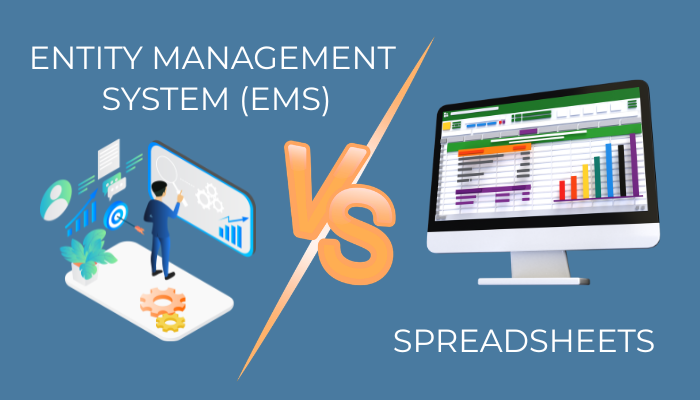
  • spreadsheets for compliance tracking

  • local advisors operating independently

  • disconnected legal, accounting, and HR processes

  • reactive decision-making instead of structured oversight

This leads to common issues such as:

  • missed filing deadlines

  • inconsistent governance practices

  • lack of real-time visibility across entities

  • delays in decision-making

  • increased regulatory and financial risk

Over time, these inefficiencies compound — especially during audits, fundraising, or expansion into new markets.

The Three Layers of Operational Control

Maintaining control across a multi-entity structure requires alignment across three core layers:

1. Legal Control (Governance & Risk Management)

Legal frameworks define how decisions are made and how risk is managed.

This includes:

  • corporate governance structures

  • contract management and risk allocation

  • regulatory compliance

  • decision-making authority and documentation

Without consistent legal oversight, companies face:

  • unclear accountability

  • contract inconsistencies

  • exposure to regulatory risk

A structured legal approach ensures that governance aligns with how the business actually operates.

2. Corporate Control (Execution & Compliance)

Corporate operations are where strategy is executed.

This includes:

  • company formation and structuring

  • annual compliance and statutory filings

  • accounting and treasury management

  • corporate secretarial and record-keeping

The challenge is not just execution — it is coordination across jurisdictions. Without centralized management, companies often experience:

  • duplicated efforts

  • inconsistent reporting

  • gaps in compliance

  • operational inefficiencies

Corporate control ensures that all entities remain compliant, aligned, and operationally consistent.

3. Technology Control (Visibility & Coordination)

Technology provides the layer that connects everything. A centralized system allows companies to:

  • track compliance obligations in real time

  • manage documents across entities

  • maintain visibility over deadlines and requirements

  • coordinate execution across teams and providers

Without technology, companies rely on manual processes that are difficult to scale. With the right system in place, they gain:

  • real-time visibility

  • improved coordination

  • faster execution

  • reduced risk of oversight

How to Maintain Control While Scaling

To maintain operational control, companies should focus on:

  • Centralization: Bring legal, corporate, and operational data into a unified structure.

  • Standardization: Create consistent processes across entities and jurisdictions.

  • Visibility: Ensure leadership has real-time insight into compliance, operations, and risk.

  • Coordination: Align internal teams and external providers under a single framework.

Operational Control as a Competitive Advantage

Companies that maintain control as they scale are able to:

  • expand into new markets faster

  • respond to regulatory changes more efficiently

  • improve financial and operational performance

  • reduce risk during transactions and audits

In contrast, companies without control often slow down as complexity increases.

How Corpiya Supports Multi-Entity Operations

Corpiya provides an integrated approach to operational control across three pillars:

  • Corpiya Counsel (Legal Services)
    U.S.-based legal support for governance, contracts, and risk management

  • Corpiya Business Services (Corporate Execution)
    Entity setup, compliance, accounting, and administrative operations across jurisdictions

  • Corpiya Tech Services (Entity Management System)
    AI-driven platform providing centralized visibility and coordination across entities

This combined approach allows companies to scale while maintaining structure, visibility, and control.

Conclusion: Control Enables Scalable Growth

Growth introduces complexity. Without structure, that complexity turns into fragmentation — across entities, teams, and jurisdictions.

Operational control is what keeps expansion aligned, visible, and executable. Companies that get this right don’t just grow faster — they operate with clarity, make better decisions, and reduce risk across every layer of the business.

Corpiya brings together legal, corporate, and technology capabilities to support multi-entity operations with structure and oversight.

Explore how Corpiya can support your global operations:
https://corpiya.com

Or contact us directly:
contact@corpiya.com

Put These Insights Into Action

Talk to our team about how this applies to your operations — wherever your business takes you, Corpiya is ready to support your next move.

Get In Touch

Contact - Send us a message

Related Insights

Back to All Insights

Is Your Merger Really Complete? Beyond the Signature: A General Counsel’s Roadmap to Seamless Post-Merger Integration

Is Your Merger Really Complete? A General Counsel's Roadmap to Seamless Post-Merger Integration

Signing a merger agreement is a major milestone—but it is not the end of the transaction. Once the deal closes, the real work begins: integrating two organizational structures, addressing inherited risks, consolidating contracts and records, and establishing a governance framework that can support the combined company.

Every newly combined organization brings its own history, documentation practices, contracts, entities, compliance obligations, and internal processes. If these elements are not integrated intentionally, legal and operational gaps can emerge quickly.

For general counsel, corporate legal teams, and business leaders, effective post-merger integration requires more than combining people and systems. It requires a structured approach to post-closing legal integration, entity management, contract alignment, compliance, and corporate governance.

This guide outlines the key post-merger integration steps organizations should prioritize to reduce risk, maintain compliance, and create a unified corporate structure built for long-term growth.

What Should Legal Teams Do After a Merger Closes?

The post-closing period should begin with a structured review of the combined organization’s legal and corporate infrastructure. Key priorities include contracts, employment and intellectual property documentation, entity structures, compliance obligations, governance records, and dormant entities.

Addressing these areas early helps prevent inherited risks from becoming long-term liabilities.

Review and Consolidate Contracts

The moment a merger closes, contract integration becomes a priority—particularly when a larger, mature company acquires a smaller organization with less structured legal and compliance processes.

Acquired businesses may have gaps in:

  • Employment agreements
  • Intellectual property documentation
  • Commercial contracts
  • Vendor agreements
  • Customer agreements
  • Legacy obligations and commitments

Overlapping commercial agreements can create additional complexity. Two merged companies may serve the same customers or suppliers under different pricing, liability, renewal, termination, or service terms.

Legal teams should therefore identify duplicate and conflicting agreements, determine which contracts require assignment or amendment, and establish a consistent contract-management process for the combined organization.

Make the Most of the Interim Period

Not all mergers close under the same circumstances. A delayed closing can give legal and operational teams additional time to prepare, while a simultaneous signing and closing can compress the integration timeline.

Where permitted, teams can use the pre-closing period to:

  • Begin discussions with key employees
  • Prepare updated HR and intellectual property agreements
  • Map entity structures and corporate records
  • Identify critical contracts and regulatory obligations
  • Coordinate internal integration planning

These steps do not become effective until the transaction closes, but preparing in advance can significantly reduce operational disruption on Day One.

Update, Organize, and Leverage Your Corporate Structure

Once the transaction closes, organizational clarity becomes essential. Corporate records, entity information, ownership data, and structural documentation from the acquired company should be centralized and reconciled with the acquiring organization’s records.

A complete corporate entity structure can help legal teams:

  • Visualize the combined organization’s legal entities
  • Identify duplicate or redundant entities
  • Identify tax and compliance inefficiencies
  • Confirm ownership and control relationships
  • Plan entity consolidations, mergers, or dissolutions
  • Establish clear accountability for each entity

Failing to update the corporate structure can create long-term problems, including unmanaged liabilities, corporate sprawl, missed compliance obligations, and unnecessary administrative costs.

Don’t Ignore Dormant Entities

Dormant entities can become hidden sources of risk after a merger if they are left unmanaged. Missing records, unclear ownership responsibilities, and outdated filings can create unexpected liabilities long after the transaction closes.

Legal teams should:

  • Maintain an accurate inventory of dormant and inactive entities.
  • Assign clear ownership and accountability for each entity.
  • Conduct periodic compliance and status reviews.
  • Confirm that required filings, licenses, and registrations remain current.
  • Apply the same governance and compliance discipline used for active entities.

By institutionalizing this oversight, dormant entities become manageable components of the corporate structure rather than overlooked sources of risk.

Build a Post-Merger Compliance Calendar You Can Trust

A merger can introduce a new universe of compliance deadlines across multiple entities and jurisdictions, including:

  • Contract renewals
  • License and permit expirations
  • Annual and statutory filings
  • Tax and regulatory deadlines
  • Corporate governance requirements
  • Registered-agent and registered-office obligations
  • Jurisdiction-specific compliance requirements

Missing deadlines after a merger can result in fines, loss of good standing, regulatory complications, or operational delays.

A reliable post-merger compliance calendar should combine deadlines, responsible parties, document requirements, automated reminders, and workflow tracking. When technology is implemented intentionally, it becomes more than a database—it becomes a governance system that helps keep the combined organization accountable.

Why Entity Management Matters After a Merger

Post-merger integration often exposes weaknesses in corporate entity management. Information may be distributed across spreadsheets, legal files, accounting systems, local providers, and disconnected internal databases.

Centralizing entity information gives legal and compliance teams a single source of truth for:

  • Legal entity details
  • Ownership and control information
  • Directors and officers
  • Jurisdictional registrations
  • Corporate documents
  • Filing deadlines
  • Compliance status
  • Intercompany relationships

This visibility allows general counsel and corporate legal teams to identify gaps faster, coordinate responsibilities, and make informed decisions about the future structure of the combined organization.

How Corpiya Helps With Post-Merger Integration

Corpiya’s legal, corporate, and entity-management capabilities help organizations bring structure and visibility to the post-merger environment. We support companies with:

  • Reviewing and updating corporate records, contracts, and governance documentation
  • Centralizing and rationalizing multi-entity structures
  • Identifying redundant, dormant, or unnecessary entities
  • Building reliable compliance calendars and governance frameworks
  • Tracking entity-level filings, registrations, and obligations
  • Supporting entity consolidation, restructuring, and post-merger integration
  • Ensuring alignment with local regulations across jurisdictions

Corpiya combines legal and corporate expertise with technology-enabled entity management to help organizations move from fragmented post-merger operations to a unified, transparent governance structure.

From Merger Closing to Long-Term Integration

Closing a merger is a legal milestone, not the completion of integration. The organizations that realize the full value of a transaction are those that address the legal, structural, contractual, and compliance implications of the combined business early.

For general counsel and corporate legal teams, a disciplined post-merger integration process can reduce inherited risk, eliminate unnecessary complexity, strengthen governance, and create a scalable foundation for future growth.

Corpiya helps organizations manage that transition with greater visibility, accountability, and control—so the newly combined company can operate as one organization rather than two businesses connected by a transaction agreement.

Have questions about post-merger integration, corporate entity management, or multi-jurisdictional compliance? Contact us at info@corpiya.com or fill out the form below to learn how Corpiya can help your organization integrate with confidence.

Put These Insights Into Action

Talk to our team about how this applies to your operations — wherever your business takes you, Corpiya is ready to support your next move.

Get In Touch

Contact - Send us a message

Related Insights

Back to All Insights

Fast-Growing Companies Need More Than Agility — They Need Strategic Guidance

Fast-Growing Companies Need More Than Agility — They Need Strategic Guidance

When a company begins to scale, the biggest challenges rarely come from lack of opportunity — they come from the complexity of making the right decisions at the right time.

From entering new markets to restructuring operations, leaders must navigate uncertainty while protecting the stability of what they’ve already built. This is where strong advisory support becomes a critical advantage rather than a luxury.

Why Decision-Making Gets Harder as Companies Grow

Growth naturally introduces new layers of risk: more jurisdictions, more stakeholders, more regulations, and more interdependent operations. While early-stage decisions may rely on intuition or agility, high-growth companies require a different approach — one grounded in structured analysis, governance, and future planning.

Many fast-scaling organizations face challenges such as:

  • Conflicting priorities across departments

  • Limited visibility on regulatory obligations

  • High-speed operational changes without long-term strategy

  • Unclear decision frameworks for evaluating new opportunities

  • Increasing exposure to compliance, tax, and operational risks

Without strategic guidance, these challenges can slow momentum, drain internal resources, and create vulnerabilities that only surface once the impact is irreversible.

Where Strategic Guidance Makes the Difference

Great strategic guidance helps leaders sharpen their decision-making by providing structure, clarity, and evidence-based insight. Instead of reacting to new challenges, companies are able to anticipate them, evaluate options objectively, and move forward with confidence.

Here’s how third-party advisory services strengthen decision-making:

  1. Clear Strategic Frameworks

    Advisory teams establish standardized processes that guide leaders through decisions involving investment, restructuring, or market expansion. This framework reduces guesswork and ensures each decision aligns with long-term goals.

  2. Risk Identification Before Impact

    High-growth companies often encounter blind spots — unseen regulatory or operational risks that surface too late. Advisory services assess vulnerabilities early, helping organizations act preventively instead of reactively.

  3. Stronger Governance and Accountability

    As a business scales, decision ownership becomes fragmented. Advisors help implement governance structures that clarify roles, define responsibilities, and streamline approvals, improving both transparency and speed.

  4. Data-Driven Recommendations

    Advisory teams bring market intelligence, regulatory insight, and comparative data from multiple jurisdictions. This perspective enables leaders to evaluate decisions using real evidence instead of assumptions.

  5. Scenario Planning for Growth

    Whether expanding to a new region, restructuring teams, or preparing for M&A, advisors build scenario models that help leaders predict outcomes and select the strongest path forward.

Turning Strategic Insight Into Competitive Strength

Strong advisory support transforms decision-making from a challenge into a strategic asset. With structured guidance, companies can move faster, avoid costly missteps, and scale with the confidence that every major decision is reinforced by expert analysis.

At Corpiya, our advisory services help leaders reduce uncertainty and make informed, future-ready decisions — ensuring your next step is always a strategic one.

If you’d like to explore how better advisory support can strengthen your organization’s decision-making, fill out the form below or contact us at info@corpiya.com.

Put These Insights Into Action

Talk to our team about how this applies to your operations — wherever your business takes you, Corpiya is ready to support your next move.

Get In Touch

Contact - Send us a message

Related Insights

Back to All Insights

Thinking About Entering Chile’s Market? Here’s the Guide for Global Businesses

Thinking About Entering Chile's Market? Here's the Guide for Global Businesses

Expanding into Chile opens the door to one of Latin America’s most stable, transparent, and opportunity-rich economies. With a strong rule of law and a business climate built on predictability, Chile has become a landing spot for companies looking for regional expansion without unnecessary uncertainty.

But entering a new market—no matter how business-friendly—comes with realities that companies need to understand early. This guide walks through the essentials: what makes Chile attractive, where challenges often appear, and how the right support can make expansion smoother and more strategic.

Why Global Companies Are Choosing Chile?

Chile continues to stand out for one key reason: CONSISTENCY. Its pro-investment policies have remained steady for decades, giving foreign companies confidence that their long-term strategy won’t be derailed by unexpected shifts. Businesses entering Chile benefit from equal legal treatment, strong institutional transparency, and access to one of the world’s broadest networks of free trade agreements—connecting them to major economies across Latin America, the U.S., Europe, and Asia.

Beyond policy, Chile’s diverse economy offers opportunity across technology, renewable energy, mining, agriculture, and professional services. The combination of stability, openness, and global connectivity makes Chile a strategic — and often preferred — entry point into the region.

The Realities of Entering Chile — Beyond the Headlines

While Chile’s market is inviting, foreign companies still face a learning curve. Establishing a presence requires following defined legal steps that differ from other jurisdictions, and aligning with Chile’s tax structure demands careful preparation. Labor standards are another core component—employment practices must follow structured rules that prioritize worker protections.

Then there’s the cultural side: Chilean business culture is formal, relationship-driven, and patient. Decisions often follow clear hierarchies, and trust-building plays a significant role in negotiations. Companies that recognize and adapt to these norms are often the ones who gain momentum the fastest.

What Every Entrant Should Be Ready For

Before launching in Chile, companies should expect to complete several essential steps:

  • Establishing a recognized presence or structure for operating locally

  • Registering foreign investment and aligning with Chile’s documentation requirements

  • Setting up tax identification and preparing to operate under local reporting standards

  • Understanding and following Chilean labor expectations

  • Opening local bank accounts and preparing the financial infrastructure needed for day-to-day operations

How Corpiya Supports Market Entry in Chile

Corpiya helps global companies create a smoother, more confident path into Chile’s market:

  • Market Entry Navigation
    Offering direction as companies learn Chile’s regulatory and operational landscape.

  • Operational Readiness Support
    Helping organizations understand the foundational steps needed to begin operating effectively.

  • Local Compliance Awareness
    Providing clarity on core obligations and helping teams stay aligned with Chile’s requirements.

  • Technology-Enabled Processes
    Supporting companies with structured, efficient systems that streamline setup and ongoing operations.

  • Ongoing Advisory
    Delivering continued guidance as companies adjust to local expectations and grow within the Chilean market.

Ready to Explore Chile With Confidence?

Chile offers opportunity—real, sustainable, long-term opportunity—but the companies who succeed are the ones who enter prepared. Corpiya helps organizations move into the Chilean market with clarity, structure, and confidence from day one.

Connect with us at info@corpiya.com or fill out the form below to get tailored support for entering and operating in Chile smoothly and compliantly.

Put These Insights Into Action

Talk to our team about how this applies to your operations — wherever your business takes you, Corpiya is ready to support your next move.

Get In Touch

Contact - Send us a message

Related Insights

Back to All Insights

Brazil Tightens IOF: How New Rules Impact Your Cross-Border Payments

Brazil Tightens IOF: How New Rules Impact Your Cross-Border Payments

Brazil’s latest IOF (Portuguese Tax on Financial Transactions) changes, driven by Decree 12,466/2025, are reshaping cross-border payments, Foreign Exchange (FX) operations, and treasury activities. Although Decree 12,499/2025 later softened some hikes, the Supreme Court’s intervention has added further uncertainty, partially reinstating the rollback.

These developments mean higher costs and more compliance complexity for companies sending money abroad, managing FX flows, or conducting corporate financial operations. In such a volatile environment, structured corporate-services support has never been more valuable.

Key IOF Changes in Brazil

Higher IOF-Credit Rates: Tax on credit between Brazilian companies rose from 0.38% + 0.0041% per day (capped at 1.88%) to 0.95% + 0.0082% per day (capped at 3.95%) for fixed-term credit. Companies should reassess credit operations and supplier financing strategies.

Outbound FX Rates Increased:

  • Short-term loans (up to 364 days): from 0% → 3.5%

  • Credit/debit card payments abroad: from 3.38% → 3.5%

  • Transfers to foreign accounts: from 1.1% → 3.5% (except for investments, which remain at 1.1%)

  • Acquisition of foreign currency (cash): 1.1% → 3.5%

Forfeit Transactions Considered Credit: Advance payments to suppliers and similar financing are now treated as credit operations, impacting IOF-credit calculations.

Additional Adjustments: Certain high-value pension plan contributions, micro-individual companies, and some cooperatives are subject to new IOF provisions.

Implications for Companies

Higher Costs: Cross-border payments and FX operations are now more expensive.

  • Compliance Complexity: Companies must adapt reporting and operational processes to meet updated IOF requirements.

  • Operational Planning: Treasury teams need to revisit cash flow forecasts, investment strategies, and supplier financing.

  • Regulatory Uncertainty: Supreme Court interventions add unpredictability, making proactive oversight essential.

How Corpiya Can Help

In a fast-changing IOF landscape, Corpiya provides tailored corporate services to reduce risk and streamline operations:

  • Entity Setup & Registered Office: Establish compliant local entities and addresses to optimize tax and payment flows.

  • Tax & Audit Support: Manage local tax filings, cross-border reporting, and IOF compliance.

  • Corporate Governance: Handle annual filings, UBO registers, and ongoing regulatory obligations.

  • Payroll & HR (PEO/EOR): Ensure compliant payroll, benefits, and employment contracts in Brazil.

  • HR Admin & Back-Office: Streamline onboarding, attendance tracking, and leave management.

  • Tech-Enabled Oversight: Use the Honeybee platform to monitor transactions, FX exposure, and forecast IOF impact.

  • Risk & Regulatory Advisory: Stay ahead of legislative changes, optimize cash flow, and minimize legal exposure.

With Corpiya, businesses can navigate Brazil’s cross-border tax changes confidently while focusing on growth, not compliance headaches.

Stay Compliant and Efficient in Brazil

Managing IOF changes doesn’t have to slow down your operations. Corpiya’s experts guide companies through Brazil’s evolving tax landscape, providing the tools and support to optimize costs and maintain regulatory compliance.

Contact Corpiya today via the form below or at info@corpiya.com to learn how we can help you manage cross-border payments and FX operations with confidence.

Put These Insights Into Action

Talk to our team about how this applies to your operations — wherever your business takes you, Corpiya is ready to support your next move.

Get In Touch

Contact - Send us a message

Related Insights

Back to All Insights

Mexico Is Booming — But Is It the Right Move for Your Business?

Mexico Is Booming — But Is It the Right Move for Your Business?

Expanding into a new market is exciting, but getting it right requires more than choosing the next country on your growth map. Mexico has become a top destination for companies looking to nearshore, scale operations, or tap into a thriving consumer base. With its strategic location, strong trade ties, and growing talent pool, the opportunity is undeniable. But entering Mexico without understanding its business environment can lead to costly delays and compliance headaches.

That’s why companies need a clear roadmap before stepping in. Mexico’s market is full of potential, but it also comes with unique regulations, regional differences, and cultural expectations that shape how business gets done. A thoughtful market-entry strategy can determine whether your expansion thrives or stalls. Here’s what you need to know before making the move.

Key Opportunities and Challenges in Mexico

  • Massive Trade Potential — Mexico is one of the U.S.’s top trading partners, offering export and nearshoring advantages

  • Growing Digital Economy — Strict regulations around data make having local infrastructure or cloud solutions a smart play.

  • Regulatory Complexity — Foreign companies need to navigate legal entity structures, foreign investment rules, and potential antitrust concerns.

  • Labor Laws & Hiring — Mexican labor law includes mandatory benefits, severance, and compliance with social security (IMSS).

  • Establishing Local Presence — Setting up a legal entity or working through local agents or distributors is often necessary to scale effectively.

  • Trade Incentives & Regional Presence — Because Mexico is divided into key commercial hubs, a regionally tailored strategy is often more effective.

  • Digital Data Regulations — Tech or digital service companies often must store certain data locally.

  • Tax & Customs Requirements — IMMEX program compliance and import/export documentation are critical for operational success.

How Companies Can Approach the Mexican Market

Entering Mexico successfully requires balancing strategy with local insights. Companies often start by identifying key regions—Mexico City, Guadalajara, Monterrey, and Baja California—to ensure their distribution or service coverage is efficient. Partnering with local distributors, agents, or strategic allies can also reduce risk and accelerate entry, especially in industries with heavy regulation or strong competition.

Understanding cultural expectations is just as important as regulatory compliance. Building trust with Mexican partners, communicating consistently, and respecting business norms can open doors that a purely transactional approach cannot. Companies that invest in both operational planning and relationship-building often see faster adoption, smoother operations, and better long-term growth.

Corpiya Can Help You Succeed

Expanding into Mexico can feel complex, but Corpiya is positioned to support businesses across Corporate, HR, Advisory, BPO, and Technology Services. We help companies navigate regulations, manage local operations, optimize their workforce, and implement the right strategies for growth. With Corpiya as a partner, your business can focus on scaling while providing the expertise and infrastructure to make the expansion smooth and successful.

If you’re ready to enter the Mexican market with confidence, reach out to Corpiya at info@corpiya.com or fill out the form below to start building your roadmap for success.

Put These Insights Into Action

Talk to our team about how this applies to your operations — wherever your business takes you, Corpiya is ready to support your next move.

Get In Touch

Contact - Send us a message

Related Insights

Back to All Insights

Peru’s New 18% Digital Services VAT: What Foreign Providers Must Know

Peru's New 18% Digital Services VAT: What Foreign Providers Must Know

Peru has introduced significant updates to its Value Added Tax (VAT) system through Legislative Decree No. 1623. Although enforcement began in late 2024, compliance expectations extend into 2025 and beyond. The reform expands VAT to cover digital services and intangible goods provided by non-resident entities, aligning Peru with global trends in digital taxation.

For companies offering cloud services, streaming, SaaS platforms, or online marketplaces, these changes create new compliance requirements that must be understood and addressed early.

What the New Decree Covers:

Under the new decree, digital services consumed in Peru are now subject to VAT—even when the provider is based abroad.

Key provisions include:

  • Scope: Applies to automated digital services such as streaming, cloud storage, online advertising, and digital marketplaces.

  • Registration: Non-resident providers must register with SUNAT (Peru’s tax authority) and obtain a local tax ID (RUC).

  • Collection and Reporting: Providers act as VAT perception agents, responsible for collecting and remitting VAT, with monthly returns due within ten business days of the following month.

  • Non-Compliance: Unregistered or non-reporting entities risk being listed publicly as non-compliant providers.

Why These Changes Matter?

These updates go beyond administrative changes—they demand system-level compliance. Businesses will need technology that can:

  • Identify when a customer is in Peru (via IP, billing address, or payment method)

  • Apply the correct VAT rate automatically

  • Generate and submit reports accurately to SUNAT

As tax authorities worldwide adopt similar rules, integrating compliance into billing and reporting systems is becoming essential for sustainable operations.

The Role of Technology in VAT Compliance

Adapting to Peru’s VAT requirements depends on how well companies can align their systems with regulatory demands. For example:

  • Billing and ERP Systems must be configured to identify taxable transactions and apply the correct VAT rates.

  • Reporting Tools should automate data collection and submission, minimizing errors and delays.

  • Data Integration across global platforms ensures consistent reporting and traceability for audits.

Automation and system integration are not just efficiency upgrades—they are compliance necessities under frameworks like Peru’s.

How Corpiya Supports Businesses Navigating Peru’s VAT Rules

Corpiya’s multidisciplinary approach—combining Advisory, Corporate, BPO, and Technology Services—positions the firm to assist clients at every stage of compliance:

  • Advisory: Interpreting Legislative Decree 1623 and SUNAT Resolution 293-2024, assessing VAT exposure, and defining compliance strategies.

  • Corporate Services: Guiding clients through SUNAT registration and ensuring that local structures meet regulatory standards.

  • BPO Services: Managing VAT filings, recordkeeping, and ongoing reporting requirements on behalf of clients.

  • Technology Services: Implementing or upgrading systems for automated VAT calculation, integration with SUNAT reporting tools, and ensuring digital compliance continuity.

By connecting regulatory knowledge with technological capability, Corpiya helps companies stay compliant and operational in Peru’s evolving digital economy.

For more information or tailored support, fill out the form below or contact info@corpiya.com.

Put These Insights Into Action

Talk to our team about how this applies to your operations — wherever your business takes you, Corpiya is ready to support your next move.

Get In Touch

Contact - Send us a message

Related Insights

Back to All Insights

Why ESG Sustainability Isn’t Optional: The Business Case for Going Green

Why ESG Sustainability Isn't Optional: The Business Case for Going Green

For years, many companies treated ESG sustainability as a reporting requirement or a side project handled by CSR teams—something nice to have but not essential to business strategy.

Today, that mindset no longer works. ESG sustainability is now a core business approach, linking environmental responsibility, social impact, and strong governance to real business performance. Companies that embrace it aren’t just improving their reputation—they’re driving efficiency, reducing costs, and gaining a measurable competitive edge.

Why Businesses Can’t Ignore ESG Sustainability

Investor expectations, regulatory requirements, and client demands are making ESG sustainability a strategic priority. Companies that embed these principles into their operations not only manage risks more effectively but also strengthen growth, attract top talent, and stay ahead of market trends. Those that lag behind risk inefficiencies, slower growth, and missed opportunities.

The Numbers Speak for Themselves

Taking ESG sustainability seriously isn’t just the right thing to do—it delivers real results. Companies that integrate ESG practices strategically have seen measurable advantages:

  • 18% higher revenue growth compared to competitors who treat sustainability as an afterthought.

  • 53% more likely to outperform peers in profitability.

  • 57% more likely to attract and retain top talent, strengthening teams for long-term success.

  • 15% reduction in operational costs by streamlining processes and improving efficiency.

These figures show that ESG sustainability isn’t just a trend—it’s a competitive edge that directly impacts growth, performance, and talent retention.

The Path Forward

The companies that thrive in today’s business landscape are the ones that treat ESG sustainability as an integral part of their operations—not a secondary task. By embedding ESG principles into strategy, decision-making, and culture, businesses can turn potential challenges into growth opportunities and measurable success.

How Corpiya Can Help?

Corpiya helps organizations bring ESG sustainability to life—beyond policies and reports. We work with businesses to align structures, governance, and operations with global ESG standards, turning compliance goals into measurable impact. Through our advisory, HR, and technology solutions, we make it easier to embed ESG sustainability into everyday decision-making, driving transparency, efficiency, and long-term value.

To learn how Corpiya can help you turn ESG sustainability into a real business advantage, contact us via the form below or at info@corpiya.com.

Put These Insights Into Action

Talk to our team about how this applies to your operations — wherever your business takes you, Corpiya is ready to support your next move.

Get In Touch

Contact - Send us a message

Related Insights

Back to All Insights

Data Protection Reinvented: Chile’s New Privacy Law Sets a Higher Standard

Data Protection Reinvented: Chile's New Privacy Law Sets a Higher Standard

After a seven-year legislative journey, Chile has passed Law No. 21.719 on the Protection of Personal Data, a landmark regulation that modernizes the country’s privacy framework and establishes the new Personal Data Protection Agency. Officially published on 13 December 2024, the law will take effect on 1 December 2026.

This reform brings Chile in line with international data protection standards and introduces a structured compliance framework for organizations handling personal data, making early preparation essential for businesses operating in the country.

Background

Chile’s previous data protection framework, Law No. 19.628 on the Protection of Private Life, had long been criticized as outdated. This new legislation draws heavily from the EU General Data Protection Regulation (GDPR), reinforcing transparency, accountability, and individual rights in data processing.

The establishment of an independent Personal Data Protection Agency marks a major institutional shift — providing a single authority to oversee compliance, investigate breaches, and sanction violations.

Key Obligations

Under Law No. 21.719, companies and organizations processing personal data must implement a robust set of measures, including:

  • Legal basis for processing: Every data processing activity must be justified, documented, and aligned with the law.

  • Enhanced transparency: Organizations must provide clear, accessible privacy policies and disclosures to data subjects.

  • Special protection for sensitive data: Biometric, health, geolocation, financial data, and information about minors require extra safeguards.

  • Breach notifications and confidentiality: Mandatory reporting of data breaches and strict confidentiality obligations are now required.

  • Oversight of service providers: Companies must ensure that any third-party service providers handling personal data also comply with the law.

  • Data protection impact assessments: High-risk processing activities must undergo formal impact evaluations.

  • International data transfers: Cross-border data transfers must meet Chile’s new regulatory standards.

  • Proportional obligations for SMEs: Small and medium-sized enterprises benefit from scaled security and transparency requirements suitable for their size.

Organizations are also encouraged to adopt a data protection compliance model, which includes appointing a Data Protection Officer and implementing internal control processes. While voluntary, certified compliance programs may serve as mitigating factors in potential sanctions.

Sanctions and Enforcement

The law introduces a detailed catalog of 30 infractions, categorized by severity.

Penalties can reach up to 20,000 UTM (approximately USD 1.39 million) for extremely serious breaches, with higher fines for repeat violations.

In addition to financial sanctions, the Agency has the authority to suspend data processing activities for up to 30 days, a measure that could significantly impact business operations.

How CRESCO Supports You with Data Privacy Compliance

Corpiya can help organizations navigate new regulations such as Chile’s new Personal Data Protection Law with confidence. From assessing current data practices and identifying gaps to designing robust compliance frameworks, we guide companies through every step of implementation.

Our experts can help define legal bases for processing, draft transparent privacy policies, conduct impact assessments, and ensure secure international data transfers. By tailoring solutions to your organization’s size and risk profile, Corpiya ensures you meet regulatory requirements efficiently while safeguarding your reputation and building trust with customers. To learn more or get started, contact us via the form below or at info@corpiya.com

Put These Insights Into Action

Talk to our team about how this applies to your operations — wherever your business takes you, Corpiya is ready to support your next move.

Get In Touch

Contact - Send us a message

Related Insights

Back to All Insights

The Future of Global Growth: Why Advisory Intelligence Is Every Leader’s Competitive Advantage

The Future of Global Growth: Why Advisory Intelligence Is Every Leader's Competitive Advantage

In a world defined by complexity, growth no longer depends on ambition alone—it depends on intelligence.

Today’s global leaders face a business environment that is faster, flatter, and far more interdependent than ever before. Markets evolve overnight. Regulations tighten without warning. Investor expectations are reshaped by sustainability, technology, and geopolitics. In this environment, instinct isn’t enough—strategy must be informed by data, foresight, and precision.

From Expansion to Intelligence

Global expansion used to be about scale. The more markets you entered, the stronger your footprint. But now, success hinges on how you expand—where, when, and with whom.

Modern advisory intelligence brings together analytics, local insight, and scenario modeling to give leaders a multidimensional view of opportunity and risk. It’s not just about identifying markets—it’s about understanding ecosystems.

Intelligent advisory turns questions into clarity:

  • Which markets offer sustainable growth potential, not just short-term gains?

  • What local partnerships create true alignment and trust?

  • How can deals be structured to balance speed, value, and compliance?

  • What tax frameworks and governance models enable global efficiency?

  • And increasingly—how can all of this be achieved responsibly, through ESG-conscious growth?

Data, Diligence, and Decision-Making

Advisory intelligence empowers leadership to make decisions based on evidence, not assumptions. Whether entering a new market, acquiring a company, or restructuring global operations, success depends on synthesizing insights across disciplines—financial, legal, operational, regulatory, and environmental.

For example:

  • A market entry analysis without ESG or tax implications considered is only half a picture.

  • A partnership may look strong commercially but fail under cultural or regulatory scrutiny.

  • An M&A deal might deliver growth on paper but stumble during post-merger integration.

True intelligence lies in connecting these dots. Advisory isn’t just guidance—it’s orchestration.

The Shift to Sustainable Strategy

Global growth now carries a dual mandate: profitability and responsibility.

Investors, regulators, and consumers expect companies to operate transparently, ethically, and sustainably. ESG is no longer an afterthought—it’s a competitive differentiator.

Forward-thinking organizations are embedding sustainability into expansion strategy from day one—evaluating supply chains, governance structures, and long-term resilience. Advisory intelligence helps balance these imperatives: identifying opportunities that drive both shareholder and stakeholder value.

Building the Future of Growth

As global markets become more unpredictable, companies that thrive will be those that turn complexity into clarity. That transformation starts with intelligent advisory—advice informed by data, grounded in expertise, and aligned with strategic intent.

In this era of constant change, advisory isn’t just about reacting to challenges—it’s about anticipating them, shaping decisions, and steering growth with confidence.

How Corpiya Enables Smarter Global Growth

Corpiya’s Advisory Services help businesses navigate the full lifecycle of global expansion—from market intelligence to deal execution, tax structuring, and ESG integration.

Our teams combine local expertise, analytical rigor, and strategic foresight to help leaders make confident decisions across markets and disciplines.

With Corpiya, companies don’t just expand—they grow intelligently, sustainably, and with lasting impact.

Learn more about how Corpiya can help you plan your next strategic move. Visit corpiya.com or contact info@corpiya.com

Put These Insights Into Action

Talk to our team about how this applies to your operations — wherever your business takes you, Corpiya is ready to support your next move.

Get In Touch

Contact - Send us a message

Related Insights

Back to All Insights