
Operational Control in Multi-Entity Businesses: How to Scale Without Losing Visibility

Operational Control in Multi-Entity Businesses: How to Scale Without Losing Visibility

As companies expand across jurisdictions, complexity increases faster than most teams anticipate.

  • New entities are formed.

  • Operations spread across countries.

  • Compliance requirements multiply.

Individually, each component is manageable. Collectively, they create a common problem: Loss of operational control.

This doesn’t happen because of a single failure. It happens gradually — through fragmented systems, disconnected processes, and lack of centralized visibility.

For growing businesses, the real challenge is not expansion. It is maintaining control while scaling.

What Is Operational Control in a Multi-Entity Structure?

Operational control refers to a company’s ability to:

  • maintain visibility across all entities

  • track compliance obligations and deadlines

  • manage legal, financial, and administrative processes consistently

  • ensure alignment between strategy and execution

In a multi-entity environment, this becomes significantly more complex due to:

  • multiple jurisdictions with different regulatory frameworks

  • varying compliance timelines and filing requirements

  • decentralized teams managing different functions

  • fragmented data across systems and providers

Without a structured approach, companies begin to lose clarity over how their organization actually operates.

Why Companies Lose Control as They Scale

Most companies do not plan for operational complexity early enough.

As a result, they rely on:

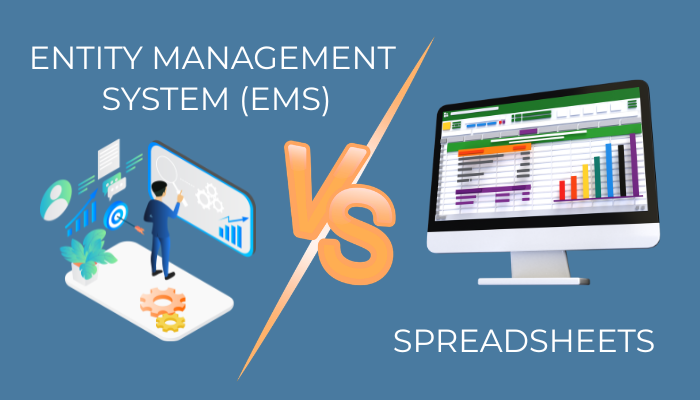
  • spreadsheets for compliance tracking

  • local advisors operating independently

  • disconnected legal, accounting, and HR processes

  • reactive decision-making instead of structured oversight

This leads to common issues such as:

  • missed filing deadlines

  • inconsistent governance practices

  • lack of real-time visibility across entities

  • delays in decision-making

  • increased regulatory and financial risk

Over time, these inefficiencies compound — especially during audits, fundraising, or expansion into new markets.

The Three Layers of Operational Control

Maintaining control across a multi-entity structure requires alignment across three core layers:

1. Legal Control (Governance & Risk Management)

Legal frameworks define how decisions are made and how risk is managed.

This includes:

  • corporate governance structures

  • contract management and risk allocation

  • regulatory compliance

  • decision-making authority and documentation

Without consistent legal oversight, companies face:

  • unclear accountability

  • contract inconsistencies

  • exposure to regulatory risk

A structured legal approach ensures that governance aligns with how the business actually operates.

2. Corporate Control (Execution & Compliance)

Corporate operations are where strategy is executed.

This includes:

  • company formation and structuring

  • annual compliance and statutory filings

  • accounting and treasury management

  • corporate secretarial and record-keeping

The challenge is not just execution — it is coordination across jurisdictions. Without centralized management, companies often experience:

  • duplicated efforts

  • inconsistent reporting

  • gaps in compliance

  • operational inefficiencies

Corporate control ensures that all entities remain compliant, aligned, and operationally consistent.

3. Technology Control (Visibility & Coordination)

Technology provides the layer that connects everything. A centralized system allows companies to:

  • track compliance obligations in real time

  • manage documents across entities

  • maintain visibility over deadlines and requirements

  • coordinate execution across teams and providers

Without technology, companies rely on manual processes that are difficult to scale. With the right system in place, they gain:

  • real-time visibility

  • improved coordination

  • faster execution

  • reduced risk of oversight

How to Maintain Control While Scaling

To maintain operational control, companies should focus on:

  • Centralization: Bring legal, corporate, and operational data into a unified structure.

  • Standardization: Create consistent processes across entities and jurisdictions.

  • Visibility: Ensure leadership has real-time insight into compliance, operations, and risk.

  • Coordination: Align internal teams and external providers under a single framework.

Operational Control as a Competitive Advantage

Companies that maintain control as they scale are able to:

  • expand into new markets faster

  • respond to regulatory changes more efficiently

  • improve financial and operational performance

  • reduce risk during transactions and audits

In contrast, companies without control often slow down as complexity increases.

How Corpiya Supports Multi-Entity Operations

Corpiya provides an integrated approach to operational control across three pillars:

  • Corpiya Counsel (Legal Services)
    U.S.-based legal support for governance, contracts, and risk management

  • Corpiya Business Services (Corporate Execution)
    Entity setup, compliance, accounting, and administrative operations across jurisdictions

  • Corpiya Tech Services (Entity Management System)
    AI-driven platform providing centralized visibility and coordination across entities

This combined approach allows companies to scale while maintaining structure, visibility, and control.

Conclusion: Control Enables Scalable Growth

Growth introduces complexity. Without structure, that complexity turns into fragmentation — across entities, teams, and jurisdictions.

Operational control is what keeps expansion aligned, visible, and executable. Companies that get this right don’t just grow faster — they operate with clarity, make better decisions, and reduce risk across every layer of the business.

Corpiya brings together legal, corporate, and technology capabilities to support multi-entity operations with structure and oversight.

Explore how Corpiya can support your global operations:
https://corpiya.com

Or contact us directly:
contact@corpiya.com

Put These Insights Into Action

Talk to our team about how this applies to your operations — wherever your business takes you, Corpiya is ready to support your next move.

Get In Touch

Contact - Send us a message

Related Insights

Back to All Insights

Thinking About Entering Chile’s Market? Here’s the Guide for Global Businesses

Thinking About Entering Chile's Market? Here's the Guide for Global Businesses

Expanding into Chile opens the door to one of Latin America’s most stable, transparent, and opportunity-rich economies. With a strong rule of law and a business climate built on predictability, Chile has become a landing spot for companies looking for regional expansion without unnecessary uncertainty.

But entering a new market—no matter how business-friendly—comes with realities that companies need to understand early. This guide walks through the essentials: what makes Chile attractive, where challenges often appear, and how the right support can make expansion smoother and more strategic.

Why Global Companies Are Choosing Chile?

Chile continues to stand out for one key reason: CONSISTENCY. Its pro-investment policies have remained steady for decades, giving foreign companies confidence that their long-term strategy won’t be derailed by unexpected shifts. Businesses entering Chile benefit from equal legal treatment, strong institutional transparency, and access to one of the world’s broadest networks of free trade agreements—connecting them to major economies across Latin America, the U.S., Europe, and Asia.

Beyond policy, Chile’s diverse economy offers opportunity across technology, renewable energy, mining, agriculture, and professional services. The combination of stability, openness, and global connectivity makes Chile a strategic — and often preferred — entry point into the region.

The Realities of Entering Chile — Beyond the Headlines

While Chile’s market is inviting, foreign companies still face a learning curve. Establishing a presence requires following defined legal steps that differ from other jurisdictions, and aligning with Chile’s tax structure demands careful preparation. Labor standards are another core component—employment practices must follow structured rules that prioritize worker protections.

Then there’s the cultural side: Chilean business culture is formal, relationship-driven, and patient. Decisions often follow clear hierarchies, and trust-building plays a significant role in negotiations. Companies that recognize and adapt to these norms are often the ones who gain momentum the fastest.

What Every Entrant Should Be Ready For

Before launching in Chile, companies should expect to complete several essential steps:

  • Establishing a recognized presence or structure for operating locally

  • Registering foreign investment and aligning with Chile’s documentation requirements

  • Setting up tax identification and preparing to operate under local reporting standards

  • Understanding and following Chilean labor expectations

  • Opening local bank accounts and preparing the financial infrastructure needed for day-to-day operations

How Corpiya Supports Market Entry in Chile

Corpiya helps global companies create a smoother, more confident path into Chile’s market:

  • Market Entry Navigation
    Offering direction as companies learn Chile’s regulatory and operational landscape.

  • Operational Readiness Support
    Helping organizations understand the foundational steps needed to begin operating effectively.

  • Local Compliance Awareness
    Providing clarity on core obligations and helping teams stay aligned with Chile’s requirements.

  • Technology-Enabled Processes
    Supporting companies with structured, efficient systems that streamline setup and ongoing operations.

  • Ongoing Advisory
    Delivering continued guidance as companies adjust to local expectations and grow within the Chilean market.

Ready to Explore Chile With Confidence?

Chile offers opportunity—real, sustainable, long-term opportunity—but the companies who succeed are the ones who enter prepared. Corpiya helps organizations move into the Chilean market with clarity, structure, and confidence from day one.

Connect with us at info@corpiya.com or fill out the form below to get tailored support for entering and operating in Chile smoothly and compliantly.

Put These Insights Into Action

Talk to our team about how this applies to your operations — wherever your business takes you, Corpiya is ready to support your next move.

Get In Touch

Contact - Send us a message

Related Insights

Back to All Insights

Growing in Mexico? Here’s Why the Right Legal Partner Makes All the Difference

Growing in Mexico? Here's Why the Right Legal Partner Makes All the Difference

Mexico is full of potential for companies looking to grow — but its modernizing regulatory environment demands knowledgeable legal support. From hiring and entity setup to contracts and operations, the right legal partner helps you interpret new requirements, avoid delays, and operate with clarity.

When laws change quickly, legal risk increases even faster

From new employment requirements to contract structuring, contractor regulations, corporate governance obligations, and cross-border compliance under USMCA, businesses need more than basic legal support — they need local expertise.

So how can companies stay protected while keeping growth on track?

Why Legal Representation Matters More Than Ever in Mexico

Operating in Mexico today requires navigating:

  1. A Changing Regulatory Environment
    Mexico has introduced reforms that reshape how companies interact with regulators, obtain permits, and structure contracts. Legal certainty is increasingly dependent on having updated, localized insights.

  2. Evolving Labor Standards
    From strict rules around outsourcing to detailed employment contract requirements and mandatory policies, labor compliance is no longer optional — it’s essential.

  3. Nearshoring Pressures
    With nearshoring accelerating, companies face higher scrutiny on labor practices, environmental compliance, foreign trade documentation, and anti-corruption controls.

  4. Heightened ESG & Reporting Requirements
    ESG obligations — once voluntary — are now tied to financial reporting, investment decisions, and supply-chain participation.

Even a small oversight — a missing clause in a contract, an outdated policy, or a misclassified worker — can trigger penalties, operational delays, or lost business opportunities.

Reliable Legal Representation for Your Local Entity

Having a qualified local legal representative is essential for meeting Mexico’s regulatory requirements and protecting your business. The right partner helps safeguard your interests, reduce exposure to risk, and keep operations running smoothly.

Trusted Legal Representation for Your Subsidiary or Branch

Choosing a legal representative — often referred to as a nominee director — is a major decision. This individual acts on your behalf, signs official documents, and helps manage legal matters. Selecting the wrong person can create compliance challenges or operational risks.

Corpiya’s experienced legal team provides dependable representation that supports your business at every stage. We help manage routine legal responsibilities, assist with negotiations and disputes, and ensure your local entity stays aligned with Mexican regulations. With Corpiya, you gain a trusted partner who reduces legal risk and keeps your operations protected, so you can focus on running and growing your business.

Have questions about legal representation in Mexico?

Reach out at info@corpiya.com or fill out the form below to ensure your entity stays compliant and protected.

Put These Insights Into Action

Talk to our team about how this applies to your operations — wherever your business takes you, Corpiya is ready to support your next move.

Get In Touch

Contact - Send us a message

Related Insights

Back to All Insights

Brazil Tightens IOF: How New Rules Impact Your Cross-Border Payments

Brazil Tightens IOF: How New Rules Impact Your Cross-Border Payments

Brazil’s latest IOF (Portuguese Tax on Financial Transactions) changes, driven by Decree 12,466/2025, are reshaping cross-border payments, Foreign Exchange (FX) operations, and treasury activities. Although Decree 12,499/2025 later softened some hikes, the Supreme Court’s intervention has added further uncertainty, partially reinstating the rollback.

These developments mean higher costs and more compliance complexity for companies sending money abroad, managing FX flows, or conducting corporate financial operations. In such a volatile environment, structured corporate-services support has never been more valuable.

Key IOF Changes in Brazil

Higher IOF-Credit Rates: Tax on credit between Brazilian companies rose from 0.38% + 0.0041% per day (capped at 1.88%) to 0.95% + 0.0082% per day (capped at 3.95%) for fixed-term credit. Companies should reassess credit operations and supplier financing strategies.

Outbound FX Rates Increased:

  • Short-term loans (up to 364 days): from 0% → 3.5%

  • Credit/debit card payments abroad: from 3.38% → 3.5%

  • Transfers to foreign accounts: from 1.1% → 3.5% (except for investments, which remain at 1.1%)

  • Acquisition of foreign currency (cash): 1.1% → 3.5%

Forfeit Transactions Considered Credit: Advance payments to suppliers and similar financing are now treated as credit operations, impacting IOF-credit calculations.

Additional Adjustments: Certain high-value pension plan contributions, micro-individual companies, and some cooperatives are subject to new IOF provisions.

Implications for Companies

Higher Costs: Cross-border payments and FX operations are now more expensive.

  • Compliance Complexity: Companies must adapt reporting and operational processes to meet updated IOF requirements.

  • Operational Planning: Treasury teams need to revisit cash flow forecasts, investment strategies, and supplier financing.

  • Regulatory Uncertainty: Supreme Court interventions add unpredictability, making proactive oversight essential.

How Corpiya Can Help

In a fast-changing IOF landscape, Corpiya provides tailored corporate services to reduce risk and streamline operations:

  • Entity Setup & Registered Office: Establish compliant local entities and addresses to optimize tax and payment flows.

  • Tax & Audit Support: Manage local tax filings, cross-border reporting, and IOF compliance.

  • Corporate Governance: Handle annual filings, UBO registers, and ongoing regulatory obligations.

  • Payroll & HR (PEO/EOR): Ensure compliant payroll, benefits, and employment contracts in Brazil.

  • HR Admin & Back-Office: Streamline onboarding, attendance tracking, and leave management.

  • Tech-Enabled Oversight: Use the Honeybee platform to monitor transactions, FX exposure, and forecast IOF impact.

  • Risk & Regulatory Advisory: Stay ahead of legislative changes, optimize cash flow, and minimize legal exposure.

With Corpiya, businesses can navigate Brazil’s cross-border tax changes confidently while focusing on growth, not compliance headaches.

Stay Compliant and Efficient in Brazil

Managing IOF changes doesn’t have to slow down your operations. Corpiya’s experts guide companies through Brazil’s evolving tax landscape, providing the tools and support to optimize costs and maintain regulatory compliance.

Contact Corpiya today via the form below or at info@corpiya.com to learn how we can help you manage cross-border payments and FX operations with confidence.

Put These Insights Into Action

Talk to our team about how this applies to your operations — wherever your business takes you, Corpiya is ready to support your next move.

Get In Touch

Contact - Send us a message

Related Insights

Back to All Insights

Why Strong Corporate Services Are the Backbone of Global Growth

Why Strong Corporate Services Are the Backbone of Global Growth

In today’s global economy, opportunities for expansion have never been greater — but neither have the complexities that come with them. From navigating multi-jurisdictional compliance to maintaining accurate records and governance, businesses must balance agility with structure.

At Corpiya, we believe that sustainable growth begins not just with vision, but with the right foundation. Corporate services — often operating behind the scenes — form the invisible framework that enables companies to scale efficiently, operate confidently, and remain compliant wherever they do business.

The Foundation of Corporate Stability

A company’s legal and operational structure defines how it grows, how it’s governed, and how it’s perceived by stakeholders. Without a sound foundation, even the most innovative businesses can falter.

Corporate services encompass the essentials that keep organizations steady — from company formation and annual compliance to corporate secretarial and registered office services. These aren’t just administrative requirements; they’re the framework that ensures accountability, transparency, and long-term resilience.

When your structure is managed properly, you reduce risk, improve governance, and create space to focus on what matters most — your core business.

Building a Foundation for the Future

The corporate world is shifting toward agility — and that requires strong infrastructure. Companies that integrate compliance, governance, and transparency into their DNA are the ones that sustain success over time.

Corpiya helps organizations future-proof their structures through:

  • Strategic entity formation and management

  • Annual and statutory compliance oversight

  • Corporate secretarial support

  • Legal representation and registered office solutions

Our holistic approach enables companies to operate with confidence, scale efficiently, and maintain their reputation in every jurisdiction.

Why Businesses Trust Advisors for Expansion

At their core, advisory services are about confidence and clarity. Leaders can move forward knowing that every decision—from entity setup to merger integration—is backed by expert insight and proven strategy. By leveraging both global knowledge and local expertise, businesses gain:

  • Clearer pathways into new markets

  • Stronger decision-making supported by data and analysis

  • Streamlined compliance and tax processes

  • Long-term strategies designed for scalability and sustainability

Turning Corporate Services Into Competitive Strength

Behind every successful organization lies a strong foundation — one built on structure, compliance, and governance. Corporate services may not always take the spotlight, but they’re what allow innovation, strategy, and growth to flourish.

At Corpiya, we help businesses turn corporate infrastructure into a strategic advantage—bringing together entity management, compliance, governance, and local expertise so every part of your organization is positioned to support sustainable growth. Whether you’re entering a new market, restructuring your global footprint, or managing an increasingly complex corporate structure, Corpiya provides the clarity and control to move forward with confidence.

Ready to build a stronger foundation for your next stage of growth? Contact us at info@corpiya.com or fill out the form below to explore how Corpiya can support your global expansion.

Put These Insights Into Action

Talk to our team about how this applies to your operations — wherever your business takes you, Corpiya is ready to support your next move.

Get In Touch

Contact - Send us a message

Related Insights

Back to All Insights

Mexico Is Booming — But Is It the Right Move for Your Business?

Mexico Is Booming — But Is It the Right Move for Your Business?

Expanding into a new market is exciting, but getting it right requires more than choosing the next country on your growth map. Mexico has become a top destination for companies looking to nearshore, scale operations, or tap into a thriving consumer base. With its strategic location, strong trade ties, and growing talent pool, the opportunity is undeniable. But entering Mexico without understanding its business environment can lead to costly delays and compliance headaches.

That’s why companies need a clear roadmap before stepping in. Mexico’s market is full of potential, but it also comes with unique regulations, regional differences, and cultural expectations that shape how business gets done. A thoughtful market-entry strategy can determine whether your expansion thrives or stalls. Here’s what you need to know before making the move.

Key Opportunities and Challenges in Mexico

  • Massive Trade Potential — Mexico is one of the U.S.’s top trading partners, offering export and nearshoring advantages

  • Growing Digital Economy — Strict regulations around data make having local infrastructure or cloud solutions a smart play.

  • Regulatory Complexity — Foreign companies need to navigate legal entity structures, foreign investment rules, and potential antitrust concerns.

  • Labor Laws & Hiring — Mexican labor law includes mandatory benefits, severance, and compliance with social security (IMSS).

  • Establishing Local Presence — Setting up a legal entity or working through local agents or distributors is often necessary to scale effectively.

  • Trade Incentives & Regional Presence — Because Mexico is divided into key commercial hubs, a regionally tailored strategy is often more effective.

  • Digital Data Regulations — Tech or digital service companies often must store certain data locally.

  • Tax & Customs Requirements — IMMEX program compliance and import/export documentation are critical for operational success.

How Companies Can Approach the Mexican Market

Entering Mexico successfully requires balancing strategy with local insights. Companies often start by identifying key regions—Mexico City, Guadalajara, Monterrey, and Baja California—to ensure their distribution or service coverage is efficient. Partnering with local distributors, agents, or strategic allies can also reduce risk and accelerate entry, especially in industries with heavy regulation or strong competition.

Understanding cultural expectations is just as important as regulatory compliance. Building trust with Mexican partners, communicating consistently, and respecting business norms can open doors that a purely transactional approach cannot. Companies that invest in both operational planning and relationship-building often see faster adoption, smoother operations, and better long-term growth.

Corpiya Can Help You Succeed

Expanding into Mexico can feel complex, but Corpiya is positioned to support businesses across Corporate, HR, Advisory, BPO, and Technology Services. We help companies navigate regulations, manage local operations, optimize their workforce, and implement the right strategies for growth. With Corpiya as a partner, your business can focus on scaling while providing the expertise and infrastructure to make the expansion smooth and successful.

If you’re ready to enter the Mexican market with confidence, reach out to Corpiya at info@corpiya.com or fill out the form below to start building your roadmap for success.

Put These Insights Into Action

Talk to our team about how this applies to your operations — wherever your business takes you, Corpiya is ready to support your next move.

Get In Touch

Contact - Send us a message

Related Insights

Back to All Insights

Peru’s New 18% Digital Services VAT: What Foreign Providers Must Know

Peru's New 18% Digital Services VAT: What Foreign Providers Must Know

Peru has introduced significant updates to its Value Added Tax (VAT) system through Legislative Decree No. 1623. Although enforcement began in late 2024, compliance expectations extend into 2025 and beyond. The reform expands VAT to cover digital services and intangible goods provided by non-resident entities, aligning Peru with global trends in digital taxation.

For companies offering cloud services, streaming, SaaS platforms, or online marketplaces, these changes create new compliance requirements that must be understood and addressed early.

What the New Decree Covers:

Under the new decree, digital services consumed in Peru are now subject to VAT—even when the provider is based abroad.

Key provisions include:

  • Scope: Applies to automated digital services such as streaming, cloud storage, online advertising, and digital marketplaces.

  • Registration: Non-resident providers must register with SUNAT (Peru’s tax authority) and obtain a local tax ID (RUC).

  • Collection and Reporting: Providers act as VAT perception agents, responsible for collecting and remitting VAT, with monthly returns due within ten business days of the following month.

  • Non-Compliance: Unregistered or non-reporting entities risk being listed publicly as non-compliant providers.

Why These Changes Matter?

These updates go beyond administrative changes—they demand system-level compliance. Businesses will need technology that can:

  • Identify when a customer is in Peru (via IP, billing address, or payment method)

  • Apply the correct VAT rate automatically

  • Generate and submit reports accurately to SUNAT

As tax authorities worldwide adopt similar rules, integrating compliance into billing and reporting systems is becoming essential for sustainable operations.

The Role of Technology in VAT Compliance

Adapting to Peru’s VAT requirements depends on how well companies can align their systems with regulatory demands. For example:

  • Billing and ERP Systems must be configured to identify taxable transactions and apply the correct VAT rates.

  • Reporting Tools should automate data collection and submission, minimizing errors and delays.

  • Data Integration across global platforms ensures consistent reporting and traceability for audits.

Automation and system integration are not just efficiency upgrades—they are compliance necessities under frameworks like Peru’s.

How Corpiya Supports Businesses Navigating Peru’s VAT Rules

Corpiya’s multidisciplinary approach—combining Advisory, Corporate, BPO, and Technology Services—positions the firm to assist clients at every stage of compliance:

  • Advisory: Interpreting Legislative Decree 1623 and SUNAT Resolution 293-2024, assessing VAT exposure, and defining compliance strategies.

  • Corporate Services: Guiding clients through SUNAT registration and ensuring that local structures meet regulatory standards.

  • BPO Services: Managing VAT filings, recordkeeping, and ongoing reporting requirements on behalf of clients.

  • Technology Services: Implementing or upgrading systems for automated VAT calculation, integration with SUNAT reporting tools, and ensuring digital compliance continuity.

By connecting regulatory knowledge with technological capability, Corpiya helps companies stay compliant and operational in Peru’s evolving digital economy.

For more information or tailored support, fill out the form below or contact info@corpiya.com.

Put These Insights Into Action

Talk to our team about how this applies to your operations — wherever your business takes you, Corpiya is ready to support your next move.

Get In Touch

Contact - Send us a message

Related Insights

Back to All Insights

Cross-Border M&A: The Compliance Pitfalls No One Talks About

Cross-Border M&A: The Compliance Pitfalls No One Talks About

Beyond the Deal:

Hidden Compliance Traps in Cross-Border Mergers and Acquisition are often framed as bold strategic moves — expanding markets, diversifying portfolios, or gaining competitive advantage. But beneath the headline-grabbing numbers lies a complex layer of compliance risk that can quietly erode deal value if overlooked.

Cross-border transactions in particular carry unique challenges. Each jurisdiction has its own regulatory environment, disclosure requirements, tax regimes, and cultural nuances. It’s not just about getting the deal signed — it’s about making sure the integration stands on a legally sound foundation.

So, what are the compliance traps that too often go unnoticed?

1. Regulatory Nuances Lost in Translation

What looks like a minor filing in one country may be a deal-breaker in another. Local regulators can take issue with ownership structures, capital controls, or even specific industries. Missing these details can delay closing — or worse, trigger penalties.

Tip: Map compliance requirements early with on-the-ground expertise, not just headquarters assumptions.

2. Labor & HR Compliance

Acquiring a workforce across borders means inheriting everything from employee contracts to pension obligations. In many countries, local labor protections are far stronger than in the U.S. or Western Europe. Failing to honor them can spark costly disputes and reputational damage.

Tip: Due diligence must go deeper than financials. HR and labor law reviews are critical.

3. Tax Structures That Don’t Travel Well

What makes sense in one tax jurisdiction can unravel in another. Transfer pricing, VAT, and double-taxation risks often lurk beneath the surface. In some cases, poor structuring can lead to years of disputes or unexpected liabilities.

Tip: Engage advisors with cross-border tax expertise before finalizing deal terms.

4. Anti-Bribery & Corruption Risks

Expanding into new markets may mean exposure to regions with higher corruption risks. Even a minor oversight in local vendor relationships can lead to major violations of international anti-bribery laws (like the U.S. FCPA or UK Bribery Act).

Tip: Robust compliance checks should extend beyond the target company to its suppliers, distributors, and partners.

5. Data Privacy & Cybersecurity

With GDPR, CCPA, and a wave of new privacy laws worldwide, data handling has become a frontline compliance issue. Acquiring customer or employee data without ensuring regulatory alignment can result in fines — and mistrust from stakeholders.

Tip: Always integrate data privacy assessments into M&A due diligence.

Conclusion: Compliance as a Value Protector

Cross-border M&A isn’t just about creating synergies or cutting costs — it’s about building sustainable value. Compliance may not be glamorous, but overlooking it can turn an exciting acquisition into an expensive cautionary tale.

The most successful deals aren’t just well-negotiated; they’re well-prepared. By anticipating compliance pitfalls early and partnering with experts who understand both global and local landscapes, companies can protect deal value and accelerate integration with confidence.

At Corpiya, we help organizations navigate complex regulatory and compliance challenges in cross-border growth. Because in today’s environment, protecting value is just as important as creating it.

For more details on how Corpiya can support your merger and acquisition needs to make your operations more efficient and productive, contact us today at info@corpiya.com or fill out the form below.

Put These Insights Into Action

Talk to our team about how this applies to your operations — wherever your business takes you, Corpiya is ready to support your next move.

Get In Touch

Contact - Send us a message

Related Insights

Back to All Insights

Why the Boring Stuff Builds Billion-Dollar Companies

Why the Boring Stuff Builds Billion-Dollar Companies

When leaders talk about scaling a company, they often focus on innovation, sales, or customer growth. Rarely does anyone mention company formation, accounting, or annual compliance as the secret to long-term success. Yet history shows that the businesses that endure—and grow into billion-dollar enterprises—are those that take corporate services seriously from day one.

What might feel like “boring” back-office work is, in reality, the architecture of credibility, resilience, and scalability. Let’s explore why.

Company Formation:
The Foundation of Growth

A company’s structure is more than paperwork—it’s the framework that determines how quickly you can expand into new markets, attract investors, and remain tax efficient. Businesses that rush through company formation often face costly restructuring later.

Practical takeaway: Treat company formation as a growth strategy, not an administrative task. The right jurisdiction, entity type, and ownership model will pay dividends for years.

Accounting and Treasury:
Turning Numbers Into Strategy

Accounting and treasury management aren’t just about balancing the books—they’re about controlling the levers of growth. Strong financial reporting gives investors confidence, while disciplined treasury practices protect liquidity during downturns.

Practical takeaway: Businesses that embed robust accounting early can pivot faster, scale more confidently, and make smarter investment decisions.

Tax and Audit:
Tools for Efficiency, Not Just Compliance

Tax planning and audits are often viewed as burdens. But businesses that treat them as strategic checkpoints gain efficiency and avoid unpleasant surprises. Proper tax structuring reduces liabilities, while transparent audits build trust with stakeholders.

Practical takeaway: Use tax and audit services to your advantage—don’t just “get through them.”

Annual Compliance:
Building Trust Through Consistency

Annual compliance may feel like a box-ticking exercise, but it signals maturity to regulators and investors. Businesses that consistently meet compliance requirements show they’re reliable, stable, and built to last.

Practical takeaway: Make compliance a steady rhythm, not a seasonal scramble.

Directorship:
Proactive Protection

Many companies only call their lawyers when trouble strikes. The smarter approach is integrating directorship from the start. Solid contracts, protected intellectual property, and well-managed risks reduce disputes and speed up business deals.

Practical takeaway: Preventing legal issues is always faster and cheaper than fixing them later.

Corporate Secretarial:
The Guardian of Governance

Corporate secretarial services might sound routine, but they’re the backbone of governance. Shareholder registers, meeting minutes, and statutory filings are often the first things investors review. Strong governance signals professionalism and investor-readiness.

Practical takeaway: Treat corporate secretarial work with the same seriousness as your financial reports—it’s a reflection of organizational discipline.

Registered Office:
More Than a Mailbox

Your registered office is more than an address—it’s a signal of stability. The right location strengthens credibility with regulators, clients, and partners, while ensuring critical communications are never missed.

Practical takeaway: A strategic registered office location can enhance your reputation and support business growth.

Streamlining Corporate Services for Sustainable Growth

The world’s most successful companies didn’t grow because they ignored the “boring stuff.” They grew because they mastered it. Corporate services—company formation, accounting, tax, compliance, legal representation, corporate secretarial work, and registered office solutions—aren’t just administrative necessities. They’re the systems that create investor confidence, regulatory trust, and long-term scalability.

When you get the fundamentals right, everything else—from fundraising to expansion—becomes easier. That’s why the “boring stuff” builds billion-dollar companies.

At Corpiya, we help companies simplify and streamline their back-office and corporate service needs—from company formation and accounting to compliance, legal representation, and governance. The result: more efficient operations, stronger investor confidence, and greater freedom to focus on what really drives performance.

For more details on how Corpiya can support your corporate services needs and make your operations more efficient and productive, contact us today at info@corpiya.com or fill out the form below.

Put These Insights Into Action

Talk to our team about how this applies to your operations — wherever your business takes you, Corpiya is ready to support your next move.

Get In Touch

Contact - Send us a message

Related Insights

Back to All Insights

Peru – UBO Affidavit Update

Peru - UBO Affadavit Update
Peru Issues New UBO Filing Deadlines Under Resolution No. 000168-2025/SUNAT. The Superintendencia Nacional de Aduanas y de Administración Tributaria (SUNAT) has set new deadlines for Ultimate Beneficial Ownership (UBO) affidavits, with phased compliance running from October 2025 to November 2026. All Peru-domiciled entities must comply or face penalties of up to 0.6% of net income.

SUNAT has announced new deadlines

Deadlines for filing Ultimate Beneficial Ownership (UBO) affidavits further extend Peru’s framework for corporate transparency. Resolution No. 000168-2025/SUNAT, published on 28 May 2025, introduces updated filing requirements for an additional group of taxpayers. This resolution reinforces SUNAT’s broader objective of gradually expanding UBO reporting across all relevant legal entities in Peru.

Background

Peru first introduced UBO disclosure rules in 2019, marking a significant step in aligning with international standards on corporate transparency and anti-money laundering (AML). These rules were expanded in 2022, as part of SUNAT’s strategic roadmap to improve the detection of illicit financial activity and prevent the misuse of corporate structures. The 2025 resolution represents the next phase in this rollout, establishing a systematic and phased approach to bring nearly all Peru-domiciled entities into the UBO reporting regime.

Applicability and Deadlines

The new obligations apply to legal entities domiciled in Peru that were not already included in the earlier deadlines (2019, 2022). Deadlines are phased according to net income reported for Fiscal Year 2024, measured in Tax Units (UIT): The November 2026 deadline also applies to:

  • Legal entities not included in the above brackets or not required to file annual or monthly returns for FY2024.
  • Entities that activated their RUC (Taxpayer ID) up to December 2024, or registered between January 2025 and November 2026.
  • Legal arrangements established in Peru and registered in the RUC during October 2024–November 2026.
Entities registering after November 2026 must comply with deadlines applicable to the period in which they register or activate their RUC.

Definition of UBO

An Ultimate Beneficial Owner (UBO) is defined as:
  • An individual who ultimately owns or controls legal entities or arrangements, directly or indirectly.
  • An individual on whose behalf a transaction is carried out, or who exercises ultimate control over a client.
This definition includes ownership through chains of entities, indirect control, or other mechanisms of influence.

Why This Matters

UBO disclosure is part of a global trend toward greater corporate transparency, driven by the Financial Action Task Force (FATF) and adopted across multiple jurisdictions. By enforcing these rules, Peru is positioning itself as a stronger player in combating money laundering, tax evasion, and corruption. For multinational groups with operations in Peru, this means additional compliance layers — but also improved credibility in the global marketplace.

How Corpiya Can Support You

Corpiya assists businesses with navigating regulatory complexity across borders, including UBO reporting obligations. Our experts ensure that your entity remains compliant with SUNAT’s requirements while minimizing administrative burden. For tailored guidance on Peru’s new UBO deadlines, contact info@corpiya.com

Put These Insights Into Action

Talk to our team about how this applies to your operations — wherever your business takes you, Corpiya is ready to support your next move.

Get In Touch

Contact - Send us a message

Related Insights

Back to All Insights